Green belt under pressure: how planning reform is reshaping England's land supply


England's housing shortfall: the number that drives everything
England is building at roughly half the rate it needs to.
The government's stated target of 1.5 million new homes by the end of this Parliament — equivalent to 370,000 completions per year — stands in stark relief against an output of just over 212,000 new homes in 2022–23. That gap, compounded over years, is what makes the December 2024 revision to the National Planning Policy Framework (NPPF) such a pivotal moment: for the first time since the previous Conservative administration stepped back from mandatory targets, councils are legally on the hook for delivery.
As of June 2026, those reforms are eighteen months old. The Planning and Infrastructure Bill is working its way through Parliament. A further NPPF consultation launched in December 2025, with a final version expected this summer. The policy landscape is moving faster than at any point in a generation — and the pressure on land supply is only intensifying.
What the December 2024 NPPF actually changed
The revised framework, published on 12 December 2024, represented the most significant planning intervention in over a decade. Four changes matter most for anyone tracking land supply and development pipeline.
Mandatory housing targets are back
Local authorities can no longer treat their housing need figures as advisory. England's combined annual target is now set at 370,000 homes, with the highest uplifts falling on authorities in the least affordable markets — predominantly London commuter belt, the South East, and major regional cities. Authorities that cannot demonstrate a five-year housing land supply face the presumption in favour of sustainable development: in practice, a materially higher risk of losing planning appeals.
From July 2026 — a threshold we are now effectively at — councils with outdated local plans face an even stricter test: they must demonstrate a six-year housing land supply rather than five. REalyse data on residential planning pipelines shows that in constrained markets across the South East and East of England, active pipeline units are already running well below what the new standard method implies as annual need, creating acute land supply gaps that developers and landowners are beginning to exploit.
Grey belt: a new category, a contested definition
Perhaps the most talked-about change is the formal introduction of "grey belt" — a new planning classification for land within the green belt that either comprises previously developed land or makes only a "limited contribution" to the green belt's five statutory purposes (checking urban sprawl, preventing town coalescence, safeguarding the countryside, preserving historic town settings, and encouraging urban regeneration).
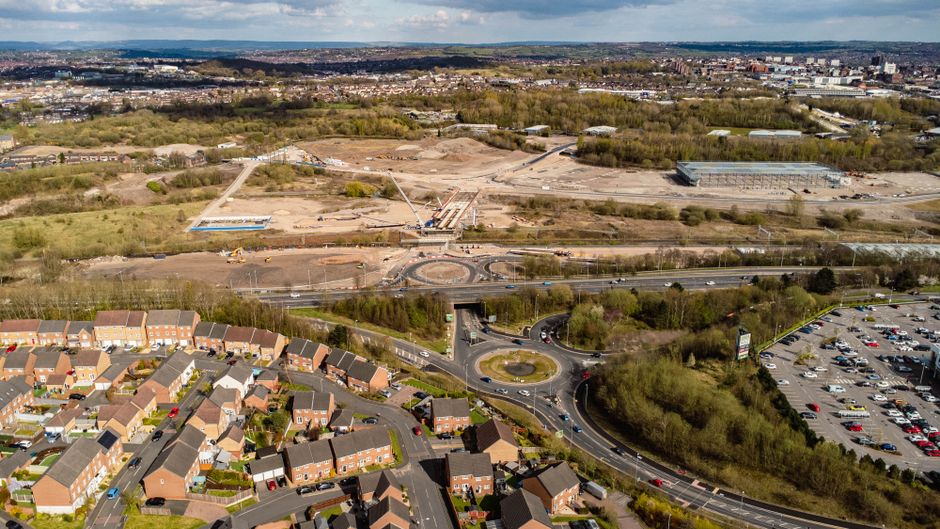
The green belt currently covers around 12.6% of England's total land area — roughly 1.6 million hectares. Most of it, however, is not the bucolic countryside of popular imagination. Car parks, scrubland, redundant agricultural buildings, and former industrial plots all sit within protected boundaries in many of England's most supply-constrained markets.
The grey belt concept is designed to unlock the lowest-value of those sites through a sequential test: brownfield first, then grey belt, then other green belt. Crucially, major residential schemes on released green belt land must now meet the "golden rules" — delivering affordable housing at up to 50% (or at least 15 percentage points above the local authority's existing requirement, whichever is lower), alongside necessary infrastructure improvements and accessible green space provision.
What the approvals data is starting to show
The Planning Officers Society reported in early 2025 that councils were beginning to recommend approval for sites meeting the new golden rules — Basildon Council's sign-off on 250 homes on farmland within the Essex green belt being one of the first tangible examples. REalyse data on green belt planning activity suggests residential applications on green belt land have trended upward since the December 2024 reforms, with more sites being promoted that would have been considered non-starters under the pre-reform framework.
Approval rates for green belt schemes, however, remain below the national average — in the 64–67% range historically, and not dramatically different in the early post-reform period. This reflects the reality that local authorities are cautious, legal challenge risk remains real, and the grey belt definition itself is still being tested through appeals. The first wave of meaningful green belt releases through updated local plans is unlikely to translate into starts on site until 2027 or 2028.
Local plan progress: a fractured picture
If one figure captures the true scale of the planning reform challenge, it is this: as of March 2024, only 90 of England's 309 local planning authorities had an adopted local plan that was less than five years old. That means roughly two-thirds of councils are operating on outdated frameworks — many written before the government's 2021 standard method, let alone the December 2024 NPPF.
An outdated local plan is not merely an administrative inconvenience. It creates instability for communities and opportunity — intended or otherwise — for developers. Where an authority cannot demonstrate a five-year housing land supply, the tilted balance towards sustainable development can override local opposition to schemes that might otherwise be refused. REalyse planning data consistently shows a correlation between authorities with weak land supply positions and elevated appeal success rates for residential applicants.
The government has responded in part: £100 million has been allocated to boost planning department capacity across England, and local authorities face strict timetables to commit to new plans or risk central government intervention. But the structural deficit in planning resource — experienced planners, legal capacity, technical evidence bases — means that even well-intentioned councils will struggle to move at the pace policy demands.
Regional divergence
The pressure is not evenly distributed. REalyse pipeline data points to the sharpest land supply constraints in:
• London and the wider South East, where affordability ratios are most extreme and green belt surrounds most major settlements
• The West Midlands, where metropolitan authorities are under significant pressure from the revised standard method
• The East of England, where several district councils have been unable to demonstrate five-year supply for multiple consecutive years
By contrast, parts of the North and Midlands — where delivery has historically been closer to local need — face fewer acute land supply pressures, though the uplifted standard method figures will still require plan updates in a number of authorities.
The investor and developer read
For property professionals, the planning reform cycle creates a clear opportunity window — but with meaningful caveats.
The grey belt policy, in principle, unlocks edge-of-city sites that were previously sterilised by green belt designation. Land values on sites that achieve a credible grey belt case can see significant uplifts — the government has floated proposals for standardised benchmark land values set at around 10 times existing use value for green belt sites, but in practice values in high-demand areas will reflect what developers can make schemes work at given the golden rules' affordable housing load.
Viability is the central tension. A 50% affordable housing requirement — or even a 35–40% rate after viability negotiation — materially changes scheme economics on edge-of-city land. REalyse data on achieved sales prices per square foot in outer metropolitan markets shows significant variation in residual land values across districts, and scheme appraisals in constrained markets like Surrey, Hertfordshire, and Essex will need to model a wide range of affordable tenure mixes to stress-test viability against the golden rules.
For investors tracking residential pipeline, the immediate priority is monitoring local plan progress. Authorities advancing green belt reviews — whether voluntarily or under pressure from inspectors and housing delivery test outcomes — represent the leading edge of future land release. Planning data can identify which districts are currently in Regulation 18 or 19 consultation, where housing delivery test results are below 75% (triggering maximum planning pressure), and where appeal activity is clustering around supply-constrained authorities.
Outlook: reform is necessary but not sufficient
The December 2024 NPPF is the most ambitious planning intervention England has seen in a generation. The grey belt concept, mandatory targets, and tightened local plan requirements together shift the system meaningfully towards delivery — at least on paper.
But planning reform alone cannot build homes. Land release, even where unlocked by policy, still requires infrastructure, viable schemes, and a construction sector with the capacity to absorb new sites. A draft NPPF further consultation in late 2025 proposed additional tools — standardised benchmark land values and potential national minimum social rent requirements — that, if enacted in the summer 2026 final version, will add another layer of complexity to scheme appraisal.
The government's 1.5 million homes target remains ambitious to the point of being almost certainly undeliverable in its current form. But the direction of travel is clear: green belt boundaries are under more sustained, systematic pressure than at any point since the 1947 Town and Country Planning Act first gave them legal force. For developers, investors, and lenders, the ability to track the planning pipeline — understanding which sites are emerging, which authorities are most exposed, and where viability conditions are most and least challenging — is fast becoming a core part of the investment process.