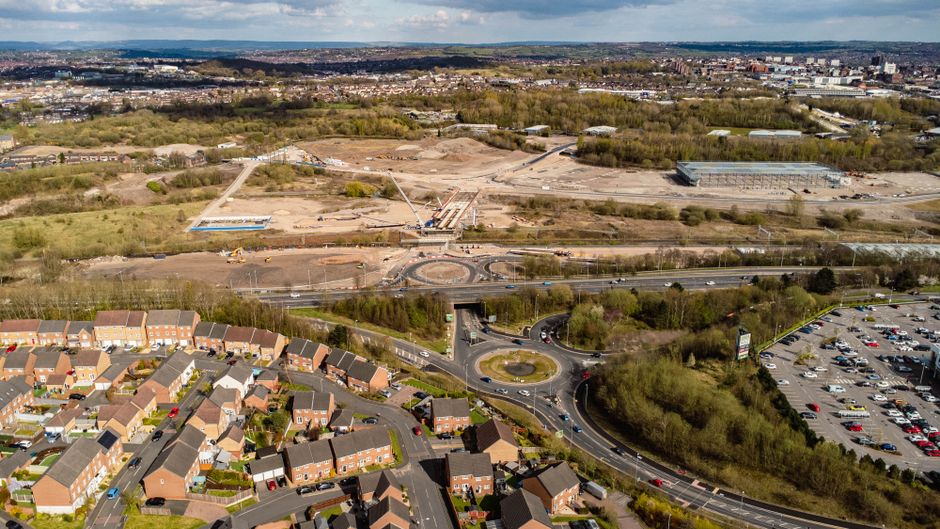
Planning delays and viability pressures are stalling the homes England desperately needs


The pipeline illusion: consented but not built
On paper, the planning system is delivering. Hundreds of thousands of residential units sit in England's consented pipeline at any given moment — schemes that have cleared the planning hurdle and, in theory, are ready to be built.
In practice, the picture is far more complicated. REalyse development data shows a persistent and growing lag between consent and construction start, with many schemes stalled for 12, 24 or even 36 months after permission is granted. The homes are counted in the pipeline. They are not being built.
This is not a new problem, but it has intensified. The combination of sustained construction cost inflation, tightening debt markets and increasingly complex Section 106 obligations has made it harder for developers to prove viability and break ground — even on schemes that looked commercially sound at the time of application.
Planning: slower, costlier, less predictable
The planning system in England was already under strain before the post-pandemic building boom hit. It has not recovered.
Local planning authorities (LPAs) are chronically under-resourced. According to data published by the Local Government Association, planning department budgets fell by around 40% in real terms between 2010 and 2024. Fewer planners means longer decision times. The statutory 8-week target for minor applications and 13 weeks for major schemes is routinely missed. Average determination times for large residential applications now frequently exceed 20–26 weeks — and that is before any appeal, pre-commencement condition discharge or judicial review is factored in.
For developers, time is money. A six-month delay to a 150-unit scheme can add hundreds of thousands of pounds in finance carrying costs alone, further compressing already thin margins. REalyse planning data consistently shows that schemes in areas with fewer active planning officers take materially longer to move through the system — and are more likely to be revised, deferred or abandoned altogether.
The government's revised National Planning Policy Framework (NPPF), published in December 2024, took steps to address some of these frictions — restoring mandatory housing targets, strengthening the presumption in favour of sustainable development and reintroducing the five-year housing land supply test. These are meaningful interventions. But policy change at the national level takes time to filter through to LPA decision-making, and early 2026 data suggests determination times remain elevated across many English regions.
Viability: the silent deal-killer
Even where planning permission is granted, viability has emerged as a critical bottleneck.
Build cost inflation surged between 2021 and 2023 — driven by materials shortages, energy price shocks and acute labour market tightness — and while the rate of increase has moderated, costs have not fallen back to pre-pandemic levels. The BCIS General Building Cost Index remains significantly above its 2019 baseline. For schemes that were underwritten at 2021 or 2022 appraisal assumptions, the numbers no longer stack up.
The result is a wave of viability renegotiations. Developers are returning to LPAs to reduce or defer affordable housing obligations, scale back Section 106 contributions or, in some cases, seek to redesign schemes at lower densities. These conversations take time. They generate friction. And they create uncertainty for registered providers, housing associations and investors who had committed to purchasing affordable units within the scheme.
REalyse data highlights the scale of the challenge: in higher-cost urban markets — inner London, the South East, parts of Bristol and Manchester — the gap between gross development value (GDV) assumptions and achievable sales prices has tightened materially since 2022. In some districts, average achieved prices per square foot have softened by 5–12% from peak, while build costs remain elevated. Schemes that pencilled at a 15–20% margin are now delivering — if they proceed at all — in the low single digits.
For Build-to-Rent (BTR) and affordable-led schemes, the pressure is equally acute. Rising financing costs have increased the required yield threshold for institutional capital, narrowing the pool of schemes that meet investment criteria without public subsidy.
Regional divergence and the land price adjustment
Not all markets are under equal pressure. The viability squeeze is most acute where land values are highest and where residual land value calculations leave little room for error.
In secondary cities and regional towns — parts of the Midlands, the North East, Yorkshire — land prices have adjusted more quickly in response to reduced developer appetite, creating windows of opportunity for well-capitalised buyers. REalyse transaction and listing data in these markets shows sites trading at meaningful discounts to their 2021 peaks, sometimes in the range of 15–30%, as vendors accept that the previous cycle's assumptions no longer apply.
In prime urban markets, the adjustment has been slower. Landowners — including significant institutional and public sector holders — have been reluctant to mark down expectations to the levels that would restore viability. The result is a standoff: sites held, schemes stalled, completions delayed.
This dynamic is one of the less-discussed drivers of the housing shortfall. The debate tends to focus on planning refusal rates, but the bigger constraint in many markets is not that schemes are being refused — it is that viable schemes are not being brought forward in the first place.
What this means for 2026 and beyond
The government's target of 1.5 million new homes over this parliament — roughly 300,000 per year — looks increasingly challenging against the structural friction in the system.
Completions in England have consistently fallen short of that level for well over a decade. The latest DLUHC housing supply statistics put net additional dwellings at around 220,000–230,000 in recent years — a significant shortfall that is unlikely to be closed quickly, even with stronger planning policy intent.
The levers for change are well understood: faster LPA decisions, digitised pre-application services, planning fee reform to fund local authority capacity, and a more pragmatic approach to viability in constrained markets. The Planning and Infrastructure Bill currently progressing through Parliament includes provisions that could help on some of these fronts. Whether implementation matches ambition is the open question.
For investors, developers and lenders operating in this environment, the message is one of granularity and precision. Headline planning statistics tell an incomplete story. The real picture lies in the gap between consented pipeline and actual starts — and in the viability assumptions underpinning individual schemes. REalyse data on local planning activity, comparable transactions, achieved prices per square foot and rental yields gives that granular view: which districts are moving, which are stalling, and where the numbers still work.
Outlook: friction before flow
The structural demand for new housing in the UK is not in question. Population growth, household formation, undersupply in the rental sector and a chronic shortage of affordable homes all point in the same direction: more homes are needed, urgently.
The challenge is not demand. It is the friction between demand and delivery — the planning delays, the viability gaps, the cost pressures and the capital constraints that sit between a consented scheme and a completed home.
Until that friction reduces materially, the pipeline will continue to look fuller than it is. And the homes that England needs will remain, for now, on paper.