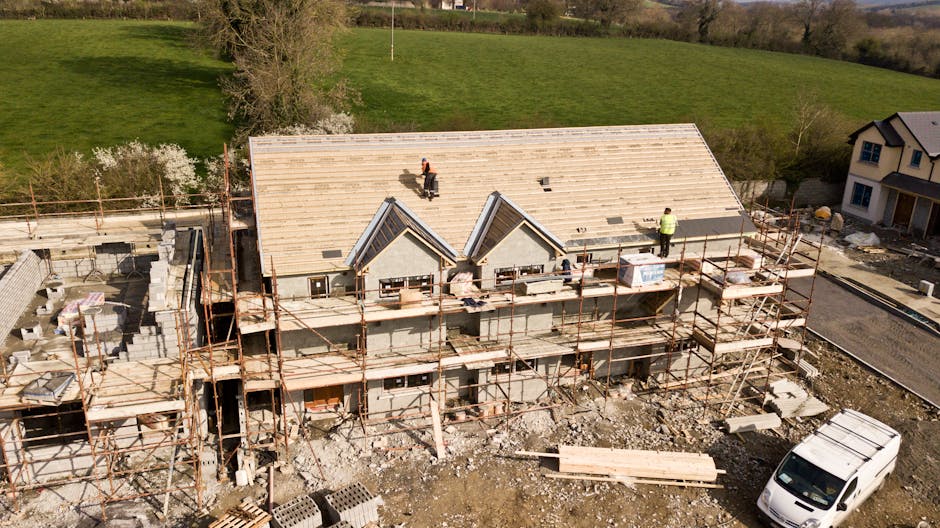
How the late 2024 NPPF reforms are reshaping England's residential planning pipeline


Introduction
When the government published its revised National Planning Policy Framework (NPPF) in December 2024, it promised a streamlined approach to housing delivery. The reforms emphasised brownfield-first development, strengthened the presumption in favour of sustainable development, and sought to reduce delays in local plan-making. Eighteen months on, the data paints an encouraging picture for the planning side of the equation—but a more cautious one for actual construction activity.
REalyse planning data shows that residential planning applications submitted after the reforms came into effect have grown substantially, with average approval rates across English regions sitting at around 67–70%. Large schemes have increased by more than 50% since mid-2024. Yet new-build transactions and scheme completions have not kept pace, highlighting a persistent gap between consent and delivery.
A stronger planning environment
Regional planning data from Q4 2024 through 2025 reveals a planning system responding positively to the NPPF changes. Across 72 English counties and metropolitan areas, the median approval rate for private housing applications reached just under 70%, with several regions—including Cornwall (78%), Devon (75%), South Yorkshire (76%), and Oxfordshire (76%)—exceeding the national average.
Central London remains the most active planning market, recording over 2,600 applications in this period with more than 15,000 units approved. The South East and North West follow closely, with Kent and Greater Manchester each processing over 800 applications.
Crucially, the data shows a marked increase in application volumes post-reform. Applications submitted from December 2024 onward outnumber those from the preceding two months by a ratio of nearly six to one—a signal that developers and landowners responded swiftly to the policy shift.
Scheme sizes growing
One of the clearest trends since the NPPF revisions is the growing scale of approved schemes. Average scheme size increased from around 21 units in Q1 2024 to more than 28 units by Q4 2024—a 33% rise. The number of large and mega-scale schemes approved also climbed, from 651 in Q2 2024 to over 1,000 in Q1 2025.
This suggests that housebuilders and institutional developers are gaining greater confidence in bringing forward sizeable sites, supported by clearer policy signals and improved local authority decision-making timescales. The average time to decision sits at around 114 days, with notable variation across regions—Cornwall averaging just 89 days while Hertfordshire exceeds 130 days.
For investors and developers tracking the residential pipeline, REalyse data indicates that scheme value in the planning system is substantial. Central London alone has more than £13.5 billion in private housing schemes either approved or in progress, with Greater Manchester and Kent each exceeding £4.5 billion.
Delivery still lagging
Despite the positive planning picture, the transition from consent to completion remains sluggish. New-build sales transactions peaked at over 31,000 in Q2 2024 but had fallen to approximately 11,400 by Q2 2025—a drop of more than 60%. Scheme completions tell a similar story, falling from nearly 2,400 completed schemes in Q2 2024 to just 400 by Q2 2025.
Several factors may explain this disconnect. Higher construction finance costs, labour and materials pressures, and developer caution in an uncertain economic environment have slowed build-out rates. Many consented schemes remain in pre-construction or have stalled at the enabling works stage.
For those monitoring the market, this creates a distinctive opportunity profile: a growing pipeline of consented sites with delayed delivery timelines means potential land deals, forward-funding opportunities, and strategic site acquisitions for patient capital.
Regional variation in planning performance
Not all regions have benefited equally from the reformed planning environment. REalyse analysis highlights significant variation in approval rates, decision timescales, and pipeline scale.
The South West consistently records strong approval rates—Cornwall and Devon both exceed 75%—combined with faster decision times. By contrast, parts of the South East, including Surrey and Essex, record approval rates closer to 56–60%, potentially reflecting Green Belt constraints and local plan conflicts.
Northern regions including West Yorkshire, Lancashire, and South Yorkshire have performed well, with approval rates in the low-to-mid 70s and healthy pipelines of large schemes. For investors seeking planning risk-adjusted opportunities, these areas warrant closer attention.
Conclusion
The late 2024 NPPF reforms have delivered a tangible improvement in England's planning environment. Approval rates are robust, large-scale schemes are gaining consent, and total pipeline value is substantial. However, the data makes clear that planning success alone does not guarantee housing delivery.
With completions and new-build sales still muted, the market remains in a transitional phase—one where consented sites are accumulating faster than homes are being built. For developers, investors, and lenders, this gap presents both risk and opportunity. Monitoring planning and delivery data together—rather than in isolation—will be essential to identifying where real value is being created.