Leeds waterfront transformation: Legal & General's £140m bet on Whitehall Riverside signals city centre revival


A Statement of Confidence in Leeds
When Legal & General commits £140 million to a single residential scheme, the market pays attention. The announcement of 500 new homes at Whitehall Riverside represents more than bricks and mortar—it signals institutional conviction that Leeds city centre has entered a new phase of urban regeneration.
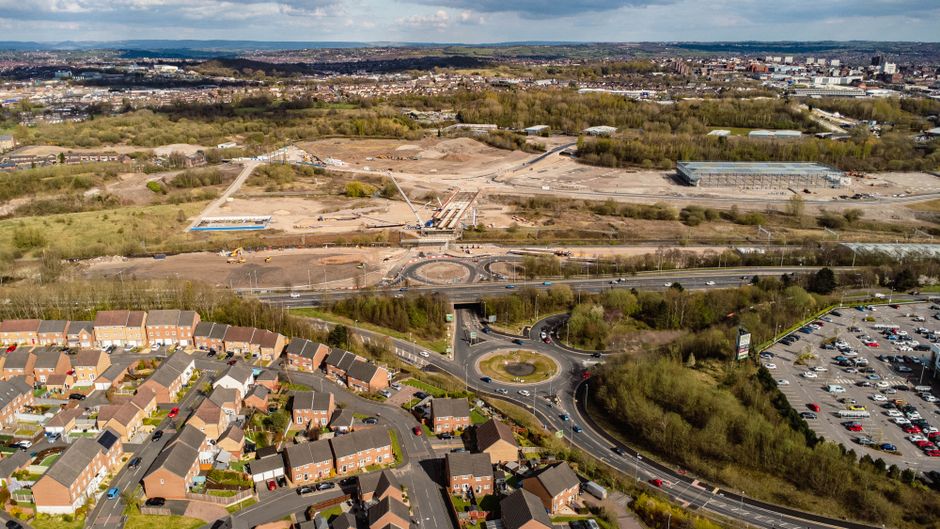
Situated along the River Aire, Whitehall Riverside sits at the intersection of Leeds' financial district and its expanding cultural quarter. The scheme's projected mid-2026 completion aligns with the city's broader ambitions to reimagine its waterfront as a mixed-use destination, blending residential, commercial, and leisure uses in a model already proven in cities like Manchester and Birmingham.
For investors, developers, and lenders evaluating Northern regional cities, this commitment provides a useful benchmark for where institutional capital sees opportunity.
The Numbers Behind the Confidence
REalyse data shows Leeds city centre (LS1) new-build flats commanding average prices above £320,000—a premium that reflects both the quality of recent developments and persistent demand for well-located urban homes. This positions city centre product significantly above the Leeds-wide average sold price of approximately £270,000.
The rental market supports the investment thesis. Across the LS1 and LS2 postcode districts, average asking rents for flats sit at around £1,037 per month, with rental growth of approximately 1-2% over the past twelve months. This steady rather than spectacular growth suggests a maturing market with room to absorb additional supply—a healthier dynamic than overheated markets that risk correction.
Transaction volumes across Leeds reached over 15,000 sales in 2024, with early 2025 data showing continued activity above 12,600 transactions. Price appreciation has remained positive, with average sold prices rising from £266,000 in 2024 to £270,000 in early 2025—a 1.6% uplift that outpaces inflation.
A Growing Pipeline Reshaping the Skyline
The Whitehall Riverside scheme enters a city centre planning pipeline already containing over 1,250 approved residential units across major schemes. This concentration of development activity reflects both planning authority support for residential intensification and developer confidence in absorption rates.
Leeds City Council's planning framework has actively encouraged waterfront regeneration, recognising that underutilised industrial land along the Aire corridor offers the city's best opportunity for sustainable urban growth. The council's South Bank regeneration programme alone anticipates thousands of new homes over the coming decade.
For those tracking development opportunities, REalyse planning data reveals that approved schemes in the LS1 and LS2 districts are predominantly market-sale and private rental tenure—reflecting institutional appetite for the city's urban core. Build-to-rent operators have been notably active, though the Whitehall Riverside scheme's mixed tenure approach suggests flexibility in exit strategy.
Why Leeds, Why Now?
Several factors converge to make Leeds an attractive proposition for large-scale residential investment in 2026.
Transport connectivity continues to improve. HS2's Eastern leg, while subject to ongoing political discussion, has already catalysed expectations around the city's station quarter. More immediately, enhanced TransPennine services and the city's position as a hub for Northern Powerhouse Rail ambitions keep it well-connected.
Economic fundamentals remain robust. Leeds' financial and professional services sector—anchored by firms in legal, banking, and technology—generates sustained demand for quality housing. The city's universities produce approximately 60,000 students annually, many of whom transition into the local workforce.
Relative value persists. Despite recent appreciation, Leeds city centre pricing remains competitive against Manchester and significantly below London equivalents. For yield-focused investors, the mathematics often favour Leeds over more established markets where entry costs compress returns.
What This Means for Market Participants
For investors and lenders, the Legal & General commitment provides due diligence comfort. When a FTSE 100 institution with deep real estate expertise stakes £140 million on a location, it validates assumptions about demand, pricing, and exit liquidity that smaller players may find harder to evidence independently.
For developers, the scheme sets expectations around quality, amenity provision, and specification. Competing schemes will need to match or exceed Whitehall Riverside's offer to capture buyer and tenant attention in an increasingly sophisticated market.
For agents and valuers, the pipeline of units approaching completion over 2026 and 2027 will generate significant transactional activity—both sales and lettings. Accurate pricing supported by robust comparables data will be essential as new stock enters a market with limited recent benchmarks.
The Outlook
Leeds' waterfront transformation reflects a broader pattern across UK regional cities: institutional capital flowing towards locations offering scale, connectivity, and economic resilience. The £140 million Whitehall Riverside investment is neither an outlier nor a gamble—it represents calculated deployment of capital into a market where fundamentals support the thesis.
REalyse data suggests the Leeds city centre residential market has the depth to absorb incoming supply without material price disruption, provided developers maintain quality and appropriately price product. The rental market's steady growth trajectory and the sales market's continued transaction volumes both point toward sustainable demand.
As Whitehall Riverside progresses toward its mid-2026 completion, it will serve as a test case for the next wave of Leeds city centre development. For those monitoring Northern regional markets, the scheme offers real-time insight into how institutional residential investment performs outside London—and whether the Northern Powerhouse narrative translates into returns.