Institutional BTR surge delivers 5,000 new homes as single-family rental commitments reshape UK housing landscape
A new era for institutional residential investment
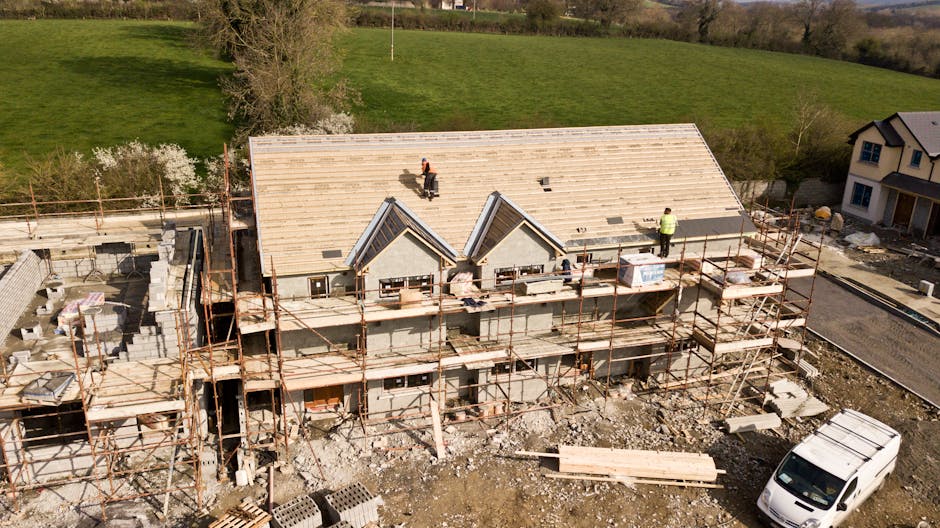
The UK's private rented sector is undergoing structural change. Institutional capital, once concentrated in commercial property, is flowing into purpose-built rental housing at unprecedented scale. In 2024, an estimated £2.5 billion in commitments targeted single-family rental (SFR) schemes—detached, semi-detached and terraced homes designed for long-term tenants rather than owner-occupiers.
This wave of investment adds approximately 5,000 new homes to the institutional rental pipeline, reinforcing a trend that has gathered pace since 2020. Unlike traditional buy-to-let, which relies on individual landlords, institutional BTR and SFR benefit from professional management, consistent maintenance standards and longer tenancy durations. For pension funds, insurers and specialist housing investors, the appeal is straightforward: residential rents offer inflation-linked returns with lower volatility than offices or retail.
Pipeline hotspots: where the homes are coming
REalyse data shows Greater Manchester leading the national BTR pipeline with over 7,500 units in various stages of planning and construction, including more than 7,400 institutional multi-family BTR units. The West Midlands follows with nearly 6,700 units, of which around 1,400 are single-family rental homes—signalling growing interest in suburban and edge-of-city locations.
Yorkshire is also emerging as a key corridor. West Yorkshire's pipeline exceeds 2,600 units, with approximately 500 designated as single-family rental. Scotland's Central Belt, notably Strathclyde and Lothian, contributes over 4,100 units combined, demonstrating that the BTR model is no longer confined to English cities.
London remains significant for multi-family BTR, with Central London contributing around 1,500 units and wider boroughs adding further stock. However, the capital's high land values and planning complexity mean growth is more constrained compared with regional cities where institutional operators can achieve scale more efficiently.
Yield dynamics favour regional markets
REalyse analysis of rental yields across property types and regions highlights why institutional capital is gravitating toward the Midlands and North. Average gross yields for BTR properties in the Midlands range from approximately 5.9% to 6.7%, comfortably exceeding London BTR yields of 4.4% to 5.2%. The North East delivers even stronger returns, with BTR yields observed above 8% for certain property types.
Single-family rental performs similarly. In the East of England and Yorkshire, gross yields for houses sit between 5.3% and 5.7%, supported by lower entry prices and robust tenant demand from families seeking space and stability. By contrast, London's single-family rental yields hover around 4.7% to 5.1%, reflecting higher capital values that compress income returns.
For institutional investors benchmarking against gilt yields and infrastructure debt, regional residential offers a compelling risk-adjusted proposition—particularly when combined with professional asset management and economies of scale.
BTR at 2%: the runway ahead
Despite rapid growth, build-to-rent accounts for just 2% of the UK's total housing stock. The private rented sector as a whole comprises roughly 4.6 million households, yet purpose-built rental homes number only in the tens of thousands. This structural undersupply creates a multi-year growth opportunity for investors willing to commit patient capital.
Government policy increasingly favours institutional rental. Planning reforms, including permitted development rights and streamlined affordable housing negotiations for BTR schemes, have reduced barriers to entry. The Renters' Rights Bill, while strengthening tenant protections, also professionalises the sector in ways that benefit institutional operators over amateur landlords.
Meanwhile, demographic trends support sustained demand. Declining home ownership among under-35s, delayed household formation and increased labour mobility all point toward a larger, more permanent rental market. For institutional capital, the question is no longer whether to invest in UK residential but where and at what pace.
Outlook: from niche to mainstream
The 5,000 homes added through 2024's SFR commitments represent a step-change in scale. Combined with multi-family BTR completions, the institutional rental sector is approaching critical mass in key cities and suburban markets.
REalyse continues to track planning applications, construction starts and achieved rents across the BTR and SFR sectors, providing investors, developers and lenders with the granular data needed to identify opportunities and benchmark performance. As capital allocation decisions become more nuanced, platforms that integrate planning pipeline, comparable transactions and yield analysis will be essential to navigating this maturing market.
The UK's rental landscape is being reshaped by institutional investment. With 98% of housing stock still outside the institutional perimeter, the growth story is only beginning.