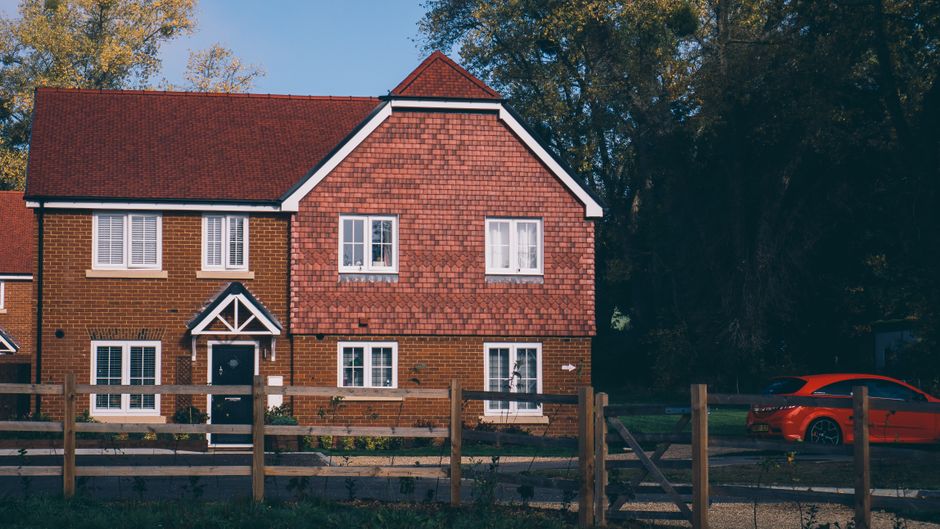
Housebuilders under pressure: profits squeezed as UK chases 1.5 million new homes


A target under strain
The government's ambition to deliver 1.5 million new homes over this Parliament was always going to test the capacity of a housebuilding sector still recovering from higher interest rates, elevated build costs and cautious mortgage markets. Recent trading statements from several listed housebuilders point to a familiar pattern: completion volumes holding up better than expected, but margins under sustained pressure from build cost inflation, incentive-heavy sales conditions and the fixed costs of building safety remediation.
For an industry that needs to roughly double its recent annual output to meet the government's ambition, the gap between political intent and commercial appetite is becoming the central story in UK development. Housebuilders are not short of land or planning consents in aggregate — they are short of schemes that stack up at current sales values and finance costs.
What the trading updates are telling us
Across the major listed builders, the through-line in recent updates is consistent: forward sales are broadly stable or modestly improved year-on-year, but average selling prices have been flat to slightly down in real terms, while build costs — particularly labour, groundworks and compliance with post-Grenfell fire safety requirements — have not fully retreated from their post-pandemic peaks. Operating margins in the 12-16% range are now being described by several management teams as a "new normal" rather than a cyclical trough, down from the high teens seen in the mid-2010s.
That margin compression matters more than headline completion numbers. A scheme priced against a 18-20% margin assumption at land acquisition can quickly become marginal — or unviable — when realised margins settle several points lower. REalyse data on sold price per square foot by property type and local authority shows the variance in outcomes: in higher-demand commuter belt and southern England locations, new-build price premiums over comparable resale stock have held up reasonably well, while in weaker regional markets that premium has thinned or disappeared, squeezing the economics of exactly the volume-driven suburban schemes the 1.5 million target depends on.
Days-on-market and incentive levels are the other tell. Where new-build completions are taking longer to sell and builders are absorbing more of the cost through deposit contributions, stamp duty support or part-exchange, effective net pricing is softer than headline asking prices suggest — a dynamic that doesn't always show up cleanly in reported average selling prices.
Viability, land value and the planning pipeline
Our planning pipeline data illustrates where the pressure is concentrated. Across live residential applications, a meaningful share of consented and in-progress units — including schemes that received planning permission twelve months or more ago — have yet to start on site. Analysts have long used "consented but not started" volumes as a proxy for viability stress, and current build cost and pricing conditions give housebuilders every incentive to sit on implementable permissions rather than commit capital to marginal schemes.
Estimated project values (value_gbp) attached to applications also show the polarisation in play: larger strategic sites and Build-to-Rent (BTR) schemes — which are structured around long-term rental income and institutional funding rather than an open-market sales assumption — have generally continued to progress through planning stages more consistently than smaller, sales-led private developer sites that are more exposed to mortgage-market sentiment and consumer confidence.
This is the crux of the viability problem: land values in many areas were set during a higher-price, lower-cost environment, and haven't fully reset to reflect current build costs, section 106/CIL obligations, biodiversity net gain requirements and building safety levies. Until landowners and housebuilders converge on lower residual land values — or planning reform meaningfully reduces the cost and time burden of getting sites oven-ready — a portion of the pipeline will remain stalled regardless of headline planning approval rates.
Can policy support and planning reform move the needle?
Government interventions — including changes to the National Planning Policy Framework, local plan mandates, and continued support for mortgage guarantee-style schemes — are aimed squarely at two levers: speeding up the planning process and supporting demand at the point of sale. Streamlining decision timelines and reducing planning committee discretion could shorten the gap between consent and start-on-site, which is valuable, but it does little on its own to fix a scheme where the fundamental sales-value-to-cost equation doesn't work.
Where policy support looks more likely to shift outcomes is in de-risking specific tenures. Continued institutional appetite for BTR and affordable/rented tenures — visible in the steadier progression of these schemes through our planning data — suggests that diversifying tenure mix within larger sites (blending open-market sale with rental and affordable tenures) is becoming a practical viability tool, not just a policy compliance exercise. For lenders and investors, this points toward underwriting models that increasingly treat mixed-tenure delivery as the base case for large strategic sites, rather than a fallback.
For institutional investors and lenders, the read-through is that site-by-site, postcode-level viability testing — informed by granular comparables on sold price per square foot, achieved rents and yields, and realistic build cost assumptions — is now doing more work than national policy headlines in determining which schemes actually get built.
Outlook
The 1.5 million homes target will not be reached through planning reform alone; it requires a housebuilding sector that can underwrite schemes profitably at prevailing sales values. Trading updates through the rest of this year will be the clearest signal of whether cost pressures are easing or whether the sector is settling into a structurally lower-margin equilibrium.
For developers, the near-term priority is disciplined site selection informed by hyper-local pricing and yield data rather than broad regional assumptions. For lenders and investors, tracking the gap between consented pipeline and actual starts — by region, tenure and developer — will be a more reliable early indicator of housing delivery than national completion targets.