UK house prices steady in early 2026 as regional divergence shapes the sales market


Signs of stability emerge after a turbulent 2025
After navigating interest rate volatility and economic uncertainty through much of 2025, the UK sales market appears to be finding its footing in the first half of 2026. Rightmove's latest asking price index showed a 1.2% monthly increase in May, while sales agreed volumes tracked only 4% below the same period last year—a notably resilient performance given the wider macro backdrop.
REalyse data paints a nuanced picture of this stabilisation. Across the UK, average days on market remain tight at 26–28 days depending on property type, suggesting that well-priced homes continue to attract buyers swiftly. Total sales listings exceeded 578,000 in the January–May period, with over 137,000 completed transactions recorded—evidence that activity levels are holding up despite affordability constraints.
A clear north-south divide in price performance
Regional analysis reveals a striking divergence in asking price trends. Southern England continues to experience modest downward pressure, with the South East recording a 5.0% year-on-year decline in average asking prices and the South West seeing prices soften by 5.4%. London has proved more resilient at -2.8%, though average asking prices in the capital remain elevated at £769,000.
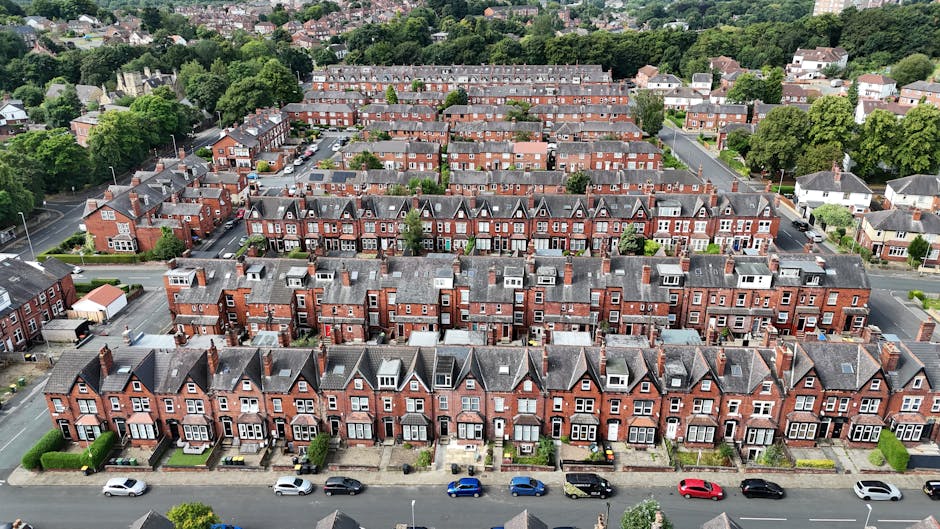
In contrast, northern regions and the devolved nations are showing positive momentum. Yorkshire and the Humber leads with a 3.8% year-on-year increase in asking prices, followed by Scotland at 3.5% and Wales at 1.9%. The North West has edged up 0.8%, while the East Midlands, West Midlands, and North East are holding broadly flat.
This pattern reflects an ongoing affordability recalibration. With mortgage rates having stabilised but remaining elevated compared to pre-2022 levels, buyers in higher-priced southern markets are exercising greater caution. Meanwhile, more accessible price points in northern regions—Yorkshire's average asking price sits at £234,000 versus £518,000 in the South East—are supporting transaction activity.
Property type matters: family homes outperform flats
REalyse transaction data highlights a significant performance gap between property types. Flats have experienced the sharpest year-on-year decline in achieved prices at -17.6%, alongside a 4% fall in asking prices. This underperformance likely reflects a combination of factors: ongoing cladding and building safety concerns, reduced investor appetite in the face of tighter yields, and shifting buyer preferences towards properties with outdoor space.
Semi-detached homes have proved the most resilient, with asking prices essentially flat year-on-year (-0.1%) and sold prices down just 1.5%. Terraced properties show similar stability at -0.7% on asking prices. Detached homes have seen modest asking price softening of 1.2%, though at an average asking price of £637,000, this segment continues to attract aspirational buyers trading up.
For agents and valuers, these patterns underscore the importance of granular comparable analysis. REalyse data enables users to benchmark specific property types within precise postcode districts, revealing local variations that headline indices can obscure.
What the data means for market participants
The current market dynamics create distinct opportunities and challenges depending on your position:
For sellers, the data suggests that realistic pricing remains essential. While headline asking prices are stabilising, the gap between asking and achieved prices—particularly pronounced in the flat segment—means that overpricing will extend time on market and risk a larger eventual discount.
For buyers, regional divergence opens strategic possibilities. Those priced out of southern markets may find better value and stronger capital growth prospects in northern cities and towns where asking prices are rising from a lower base.
For investors, the flat market's underperformance merits careful attention. While yields in this segment have improved as prices have fallen, the sector faces structural headwinds. Buy-to-let investors should scrutinise building safety documentation and factor in potential remediation costs when conducting due diligence.
Outlook: cautious optimism with rate-dependent upside
The early 2026 data points to a market that is stabilising rather than surging. With sales volumes within touching distance of 2025 levels and days on market remaining compressed, underlying demand appears robust. However, meaningful price growth in higher-value southern markets likely requires further mortgage rate reductions—a scenario dependent on the Bank of England's assessment of inflation trajectories.
REalyse will continue tracking these trends at postcode-district level, enabling property professionals to move beyond headline statistics and identify the micro-markets where opportunity is greatest.