Grey belt reform and the race to 1.5 million homes: where planning policy meets delivery reality


The political stakes: unlocking land to meet an ambitious target
The housing numbers tell a stark story. With 1.3 million households on social housing waiting lists and the government pledging to deliver 1.5 million new homes by 2029, England needs to add roughly 822 homes every single day. Current delivery rates fall well short of this—net additions have hovered around 200,000 annually in recent years, leaving a significant gap between ambition and output.
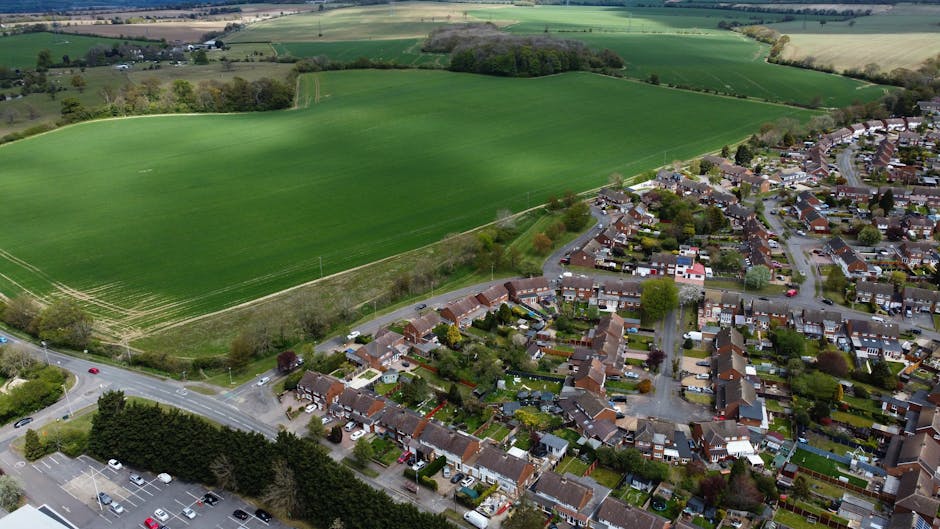
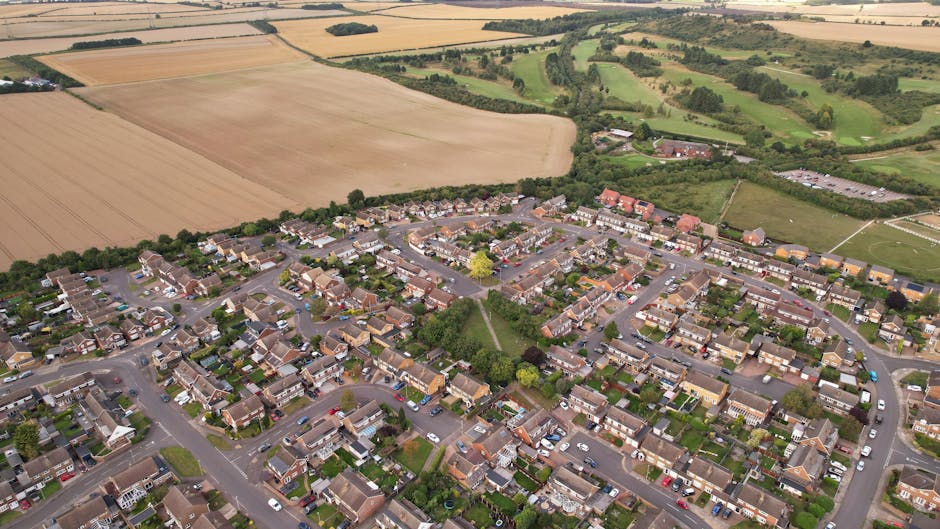
Enter the grey belt. First introduced in the December 2024 revision to the National Planning Policy Framework (NPPF), this new land classification targets portions of the green belt deemed "low quality"—land that does not strongly contribute to preventing urban sprawl or stopping neighbouring towns from merging. The policy marks the most significant loosening of green belt protections since the designation was formalised in 1955.
The December 2025 Planning and Infrastructure Act has since cemented these reforms into law, alongside expanded planning capacity (an additional £48 million for approximately 1,400 new planning officers) and streamlined environmental processes designed to reduce scheme-level delays.
Defining the grey belt: policy versus practice
The NPPF defines grey belt as land in the green belt comprising previously developed sites and/or land that does not strongly contribute to specific green belt purposes—namely checking urban sprawl, preventing towns from merging, and preserving the setting of historic towns.
Ministers originally framed the policy around "disused petrol stations" and "abandoned car parks"—the ugliest, most obviously surplus land at the edge of built-up areas. In practice, the definition has proven considerably broader.
Research from the Campaign to Protect Rural England (CPRE) found that of the 1,250 homes approved on grey belt land by planning inspectors since December 2024, 88% will be built on previously undeveloped countryside rather than genuinely degraded brownfield. In Tonbridge, Kent, 57 houses were approved on some of the country's best-quality farmland under the grey belt designation. In Castle Point, Essex, 47 homes were permitted on a designated Local Wildlife Site.
This gap between rhetoric and reality has fuelled local resistance. In St Albans, CPRE analysis found that over 200 hectares of land across eight planning applications—equivalent to more than 300 football pitches—have been justified as grey belt since December 2024. The council leader has publicly criticised the loosening of the definition, arguing it makes genuine countryside protection increasingly difficult.
Pipeline data: what the numbers show
REalyse data on the residential planning pipeline reveals both the scale of potential supply and the regional variations that will shape delivery.
Large residential schemes (50+ units) with planning permission collectively account for approximately 3.7 million units across over 16,000 schemes—a substantial backlog of consented development that has not yet translated into completed homes. A further 950,000 units across more than 3,300 schemes remain pending in the planning system.
However, the trend in new approvals has been declining. Residential units approved through planning fell from roughly 490,000 in 2021 to around 280,000 in 2024—a contraction of over 40% in three years. Early 2025 data suggests a partial recovery, with applications surging and Q4 2025 dwelling starts rising 23% quarter-on-quarter to reach 37,300 (seasonally adjusted).
Regional approval rates vary significantly—and this matters for grey belt policy, which is most relevant in green belt-constrained areas around major cities. In the South East, where housing pressure is greatest, approval rates in counties like Essex (59%), Surrey (61%), and Bedfordshire (61%) lag behind areas like Cornwall (81%), Derbyshire (80%), and County Durham (85%). These lower approval rates in commuter belt areas reflect exactly the planning friction that grey belt reforms are designed to address.
Where delivery could still stall
Three structural challenges could prevent grey belt policy from achieving its intended impact.
Local resistance and political sensitivity. Grey belt approvals often override local council decisions—over a dozen schemes of 10+ homes have been approved by planning inspectors over the heads of local authorities since December 2024. This creates political friction. A House of Lords report has criticised the policy as "rushed" and lacking strategic rigour, while CPRE has accumulated over 42,000 petition signatures calling for the definition to be amended. The policy remains highly contested in precisely the constituencies where it would have the greatest effect.
Infrastructure capacity. New housing requires supporting infrastructure—schools, GP surgeries, transport links, water and power connections. The NPPF's "golden rules" require grey belt developments to deliver necessary infrastructure alongside at least 50% affordable housing, but funding and delivery mechanisms remain unclear. Highway approvals and utility connections continue to delay otherwise consented schemes, creating a gap between planning permission and physical starts.
Construction sector constraints. Even with planning permission, homes need to be built. Labour shortages remain acute—only 24,500 people started construction apprenticeships in England last year against a target of 40,000 new workers. Material costs have risen sharply: UK-produced brick prices are 80% higher than a decade ago, and insulation, metalwork, and precast concrete costs have increased 50% since 2021. Higher interest rates have also increased developer borrowing costs, compressing viability margins on schemes that must deliver 50% affordable housing.
Early indicators: is the policy working?
Despite these headwinds, there are signs of movement. By March 2025, over 100 planning appeal decisions had cited grey belt in their reasoning—a rapid uptake for a policy less than six months old at that point. Notable approvals include a 550-home scheme in St Albans, 250 homes in Basildon, and 135 homes in Bagshot, Surrey—all on land that would likely have been refused under previous rules.
Planning Portal data shows 335,000 homes were applied for outside London in 2025, a 60% increase on 2024. TerraQuest, which operates the Portal, attributes the growth partly to grey belt reforms enabling "applications that wouldn't have previously" come forward.
Housing Secretary Steve Reed has pointed to an 18% increase in new build starts over the year to September 2025 as evidence of "green shoots of recovery." Government figures indicate approximately 310,000 homes have been completed since the July 2024 election—around a fifth of the 1.5 million target with four years remaining.
Outlook: delivery depends on more than planning reform
Grey belt policy has undeniably changed the calculus for land promotion and development in constrained areas. Sites that would have been non-starters 18 months ago are now in play, and the pipeline of applications reflects this shift.
But planning permission is not the same as delivery. The gap between consented units (over 4.6 million in the pipeline) and actual completions (around 200,000 annually) points to systemic constraints beyond the planning system—viability, infrastructure, labour capacity, and market demand all play a role.
For developers, investors, and lenders, the grey belt reforms create opportunities in locations that have historically been constrained. Areas with strong transport links, particularly around railway stations explicitly prioritised in the December 2025 NPPF, may see accelerated development. But scheme-level viability analysis remains essential: the 50% affordable housing requirement and infrastructure contributions can significantly affect returns.
The 1.5 million target remains ambitious. Whether grey belt reform proves transformational or merely incremental will depend not just on planning decisions, but on whether the construction sector can scale to meet a pipeline that policy has only just begun to unlock.