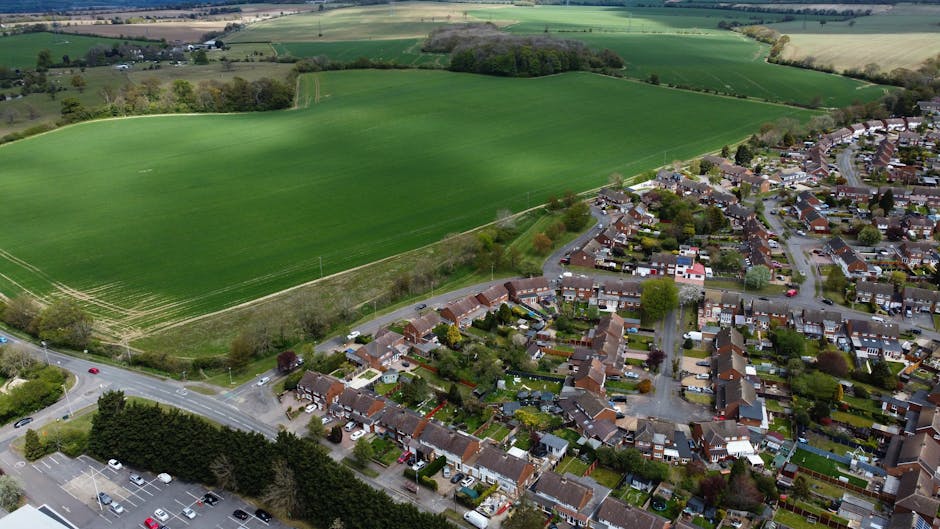
Grey belt reclassification and the 1.5 million homes pledge: what it means for housing delivery in high-demand areas


The grey belt concept was introduced as a pragmatic compromise: unlock low-quality green belt land—derelict garages, disused car parks, scrubland with minimal environmental value—whilst preserving genuinely protected countryside. Nearly two years into implementation, the reality on the ground tells a more complex story.
Research published by the London Green Belt Council and CPRE Hertfordshire has revealed that 89% of planning applications submitted on green belt land in Hertfordshire were classified by developers as grey belt. More striking still, over 80% of planning appeals in the London Green Belt during 2024 were approved on grey belt grounds—more than double the historic approval rate for any green belt application.
For investors, developers, and local authorities, understanding where opportunities lie—and where political resistance may stall delivery—has become essential.
The scale of ambition: 1.5 million homes in five years
The government's commitment to building 1.5 million homes by mid-2029 requires annual delivery of 300,000 dwellings—a target the UK has not achieved since the 1960s. To meet this goal, planning reforms have reintroduced mandatory housing targets for local authorities, fast-tracked brownfield approvals, and created the grey belt designation for land that "contributes minimally to green belt objectives."
Industry analysis suggests the grey belt could theoretically accommodate between 3.4 and 4 million homes. Even utilising just 1% of the current green belt—which covers approximately 1.64 million hectares, or 13% of England's land area—could deliver over 738,000 homes according to research by Lomond. Additionally, over 3,400 planning applications rejected since 2010 due to green belt location may now qualify for reconsideration, representing an estimated 27,000 potential homes with a market value exceeding £12 billion.
REalyse planning data shows the residential pipeline is already responding. Across the Home Counties and outer metropolitan areas, local authorities are processing thousands of applications. Buckinghamshire alone has over 400 active residential planning applications representing more than 10,500 potential units. Similar concentrations appear in Central Bedfordshire, Kent, and the Cambridge corridor—all areas where green belt land has historically constrained development.
Where the demand pressure is greatest
The case for grey belt release is most compelling in areas where housing demand has outstripped supply for decades. REalyse transaction data from the past 24 months reveals the intensity of this pressure.
Outer London boroughs recorded over 133,000 sales transactions, with flats averaging £315,000 and detached homes exceeding £1 million. The Home Counties show similar patterns: Hertfordshire averaged £850,000 for detached properties, whilst even Essex—traditionally more affordable—saw detached homes transact at nearly £590,000 on average. Surrey and Berkshire both recorded average detached prices above £740,000.
These price levels reflect constrained supply meeting sustained demand. For decades, green belt designations have limited outward expansion of London and major cities, pushing prices upward and forcing buyers further into commuter belts. The grey belt policy aims to release pressure precisely where it is most acute: the metropolitan fringes of high-demand urban areas.
The political battleground: local resistance and reputational risk
Yet the policy faces significant headwinds. Environmental groups, including CPRE and the London Green Belt Council, argue that the grey belt definition has proved so expansive that virtually any parcel of green belt land is now vulnerable. Their analysis found that over 80% of sites reclassified in Hertfordshire comprised "good quality countryside and productive agricultural land" rather than the derelict brownfield sites the public was led to expect.
Public sentiment remains strongly protective of green spaces. Polling by More in Common found that 86% of respondents consider green belt protections important, with strong appetite for prioritising brownfield development instead.
This creates a dilemma for developers. Whilst grey belt sites may offer faster routes to planning consent, they also carry reputational and political risk. Local opposition can delay schemes through judicial review, councillors may resist allocations in updated local plans, and the pendulum of national policy could swing back under future administrations.
REalyse data reveals that approval rates vary significantly across local authorities. In some areas, granted applications represent over 40% of the total; in others, refusals outpace approvals. For investors conducting due diligence, understanding local authority attitudes—and the composition of planning committees—has become as important as site fundamentals.
The delivery gap: 1.4 million consented homes remain unbuilt
Perhaps the most politically uncomfortable finding for all sides is the scale of existing permissions. Over 1.4 million homes granted planning consent since 2017 have yet to be constructed. Critics argue that the housing crisis stems not from planning constraints but from delivery bottlenecks: skills shortages, materials costs, and the commercial decisions of volume housebuilders to manage supply.
Industry research suggests a further 100,000 to 200,000 homes could be accommodated on genuinely previously developed brownfield sites within the existing green belt—land requiring no reclassification controversy.
The government has responded by establishing a "Take Back Control Unit" to assist local authorities in holding developers to Section 106 obligations. Standardised viability assessments aim to prevent developers from evading affordable housing commitments. Grey belt developments themselves must deliver 50% affordable housing with rents at least 20% below market levels—a requirement that will significantly affect scheme economics.
Implications for investors and developers
For institutional investors, lenders, and developers, grey belt policy creates a bifurcated opportunity set.
Short-term: Sites already classified as grey belt, particularly those with strong transport links and established infrastructure, may offer accelerated routes to consent. The South East—home to 21% of rejected planning applications that could now be revisited—represents the largest concentration of potential opportunity. REalyse planning data can help identify sites where applications were previously refused on green belt grounds that may now merit reconsideration.
Medium-term: New local plan reviews will determine which green belt parcels are reclassified. Investors able to engage early in these processes—providing evidence on housing need, infrastructure capacity, and site suitability—may secure strategic positions ahead of formal allocations.
Risk factors: Political sentiment, judicial challenges, and the possibility of policy reversal under future governments all represent material risks. Schemes perceived as undermining genuine green spaces may face sustained local opposition that delays or defeats even consented applications.
REalyse market intelligence shows that areas with the most active planning pipelines tend to be those with the strongest underlying demand fundamentals: high transaction volumes, rising prices, and constrained existing supply. Yet these are also often the areas with the most organised opposition to development.
Outlook: pragmatism meets politics
The grey belt experiment represents the most significant shift in English planning policy in decades. Its success will be measured not by hectares redesignated but by homes actually delivered—and by whether those homes reach the affordable tenures and price points the market most urgently needs.
Early evidence suggests the policy is unlocking applications that would previously have failed. Whether it unlocks construction at scale remains to be seen. Supply chain constraints, skilled labour shortages, and housebuilder commercial strategies all constrain delivery independently of planning.
For those navigating this landscape, data-driven decision making has never been more important. Understanding where demand is strongest, where pipeline is advancing, and where political resistance is most entrenched will separate successful strategies from stranded investments.
The 1.5 million homes target is ambitious. The grey belt may contribute—but it will not be the whole answer. Brownfield intensification, new town developments, and public sector delivery will all need to play their part. What is clear is that the housing market in England's high-demand areas is entering a period of significant change—and those best positioned with accurate, timely data will be best placed to respond.