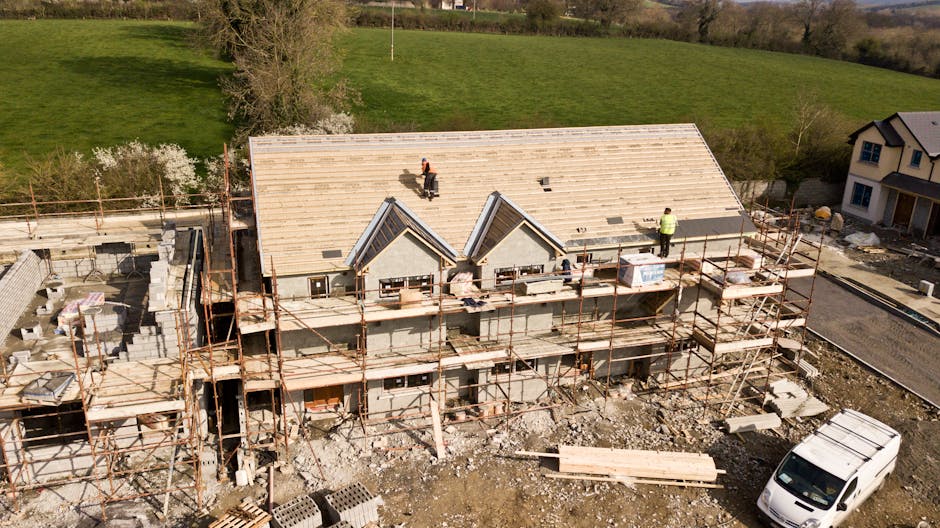
How December 2025 planning reforms are accelerating energy-efficient housing delivery across the UK


A turning point for sustainable housebuilding
The UK housing sector entered 2026 with renewed momentum, driven by planning reforms enacted in December 2025 that simplified the approval process for developments meeting the Future Homes Standard. These changes—designed to accelerate the transition to low-carbon homes—appear to be gaining traction, with REalyse planning data revealing sustained activity in residential applications and a healthy pipeline of units under construction.
For developers and investors navigating the new regulatory landscape, understanding where and how these reforms are translating into actual housing delivery is critical to identifying opportunities in an increasingly sustainability-focused market.
What the December 2025 reforms changed
The Future Homes Standard, first announced in 2019 and refined through subsequent consultations, mandates that new homes produce 75-80% less carbon emissions than those built under previous building regulations. The December 2025 reforms went further by introducing streamlined approval pathways for developments that demonstrably meet or exceed these requirements.
Key measures include:
• Fast-track planning for compliant schemes: Local planning authorities can now expedite decisions on applications featuring certified low-carbon technologies such as heat pumps, solar PV arrays, and high-performance insulation.
• Reduced S106 requirements: Developments meeting Future Homes criteria may benefit from modified affordable housing contributions in certain authorities, improving scheme viability.
• National Design Code alignment: Compliance with energy standards now contributes to meeting local design code requirements, reducing grounds for refusal.
These changes were implemented alongside the government's broader push to deliver 1.5 million homes over the current parliamentary term, with sustainability positioned as a non-negotiable pillar of that strategy.
Planning activity: what the data shows
REalyse planning data reveals a robust picture of residential development activity since the reforms took effect. Across England, December 2025 saw over 1,400 residential planning applications submitted, proposing more than 53,000 units—figures that represent strong activity by recent standards.
Approval rates have remained healthy, averaging around 65-70% for decided applications in England during late 2025 and early 2026. Scotland has demonstrated particularly high approval rates, frequently exceeding 80%, reflecting both streamlined local processes and strong policy alignment with net-zero objectives.
Notably, applications featuring explicit sustainability indicators—references to energy efficiency, heat pumps, solar installations, or low-carbon construction methods—have become increasingly common. REalyse data shows these indicators appearing in several dozen applications per month across England alone, a figure that has grown steadily since the December reforms.
Regional breakdown
• England: Dominates overall volumes, with over 1,200-1,400 applications submitted monthly in 2026 to date, proposing between 30,000 and 52,000 units per month.
• Scotland: Consistent activity with 60-80 applications monthly and approval rates frequently above 80%.
• Wales: Smaller volumes of 40-50 applications per month, with approval rates typically in the 70-75% range.
• Northern Ireland: Approximately 30 applications monthly, with strong approval performance on decided schemes.
Pipeline and completions: delivery is accelerating
Beyond applications, the new-build pipeline data tells an encouraging story of actual housing delivery. December 2025 was a particularly strong month for completions, with REalyse data recording over 53,000 houses and bungalows and more than 13,000 flats reaching completion across the UK.
Construction activity remains elevated heading into mid-2026. The data shows tens of thousands of units currently under construction across all property types, with houses and bungalows accounting for the largest share of activity. Schemes awaiting construction starts—those with planning approval but not yet on site—represent additional pipeline depth that will translate into future completions.
This pipeline strength is significant for investors and developers. Schemes designed to Future Homes Standard specifications often command premium valuations, reflecting both regulatory future-proofing and growing tenant and buyer preferences for energy-efficient homes. REalyse market data indicates that new-build properties with high EPC ratings increasingly outperform on both rental yields and capital values compared to older stock requiring retrofit.
Implications for developers and investors
The December 2025 reforms create clear incentives for developers to front-load compliance with the Future Homes Standard, even ahead of the mandatory implementation date. Those doing so benefit from:
• Faster time to approval: Streamlined pathways reduce planning risk and holding costs.
• Improved viability: Modified S106 terms can enhance scheme margins.
• Market positioning: Early compliance builds brand equity with increasingly sustainability-conscious buyers and tenants.
For investors, the data points to continued strength in the UK new-build market, particularly for schemes in regions with efficient planning processes and strong underlying demand. Scotland's consistently high approval rates and England's sheer volume of activity both present opportunities, depending on investment strategy.
Build-to-rent operators and institutional investors are particularly well-positioned to benefit. Future Homes Standard-compliant developments align with ESG mandates and offer operational cost savings through reduced energy consumption—factors that support both income stability and long-term asset value.
Outlook: sustained momentum expected
The early evidence suggests that the December 2025 reforms are achieving their intended effect. Planning activity remains robust, completions have accelerated, and the pipeline of units under construction points to continued delivery through 2026 and beyond.
Challenges remain—construction cost inflation, skills shortages, and regional planning capacity constraints could all temper progress. However, the policy direction is clear, and developers who align their pipelines with the Future Homes Standard are likely to find the planning system working more readily in their favour.
For those seeking to capitalise on these trends, REalyse provides the planning, transaction, and market intelligence needed to identify compliant schemes, benchmark values, and track pipeline activity at the granular level. As the UK housing market adapts to its net-zero future, data-driven decision-making has never been more essential.