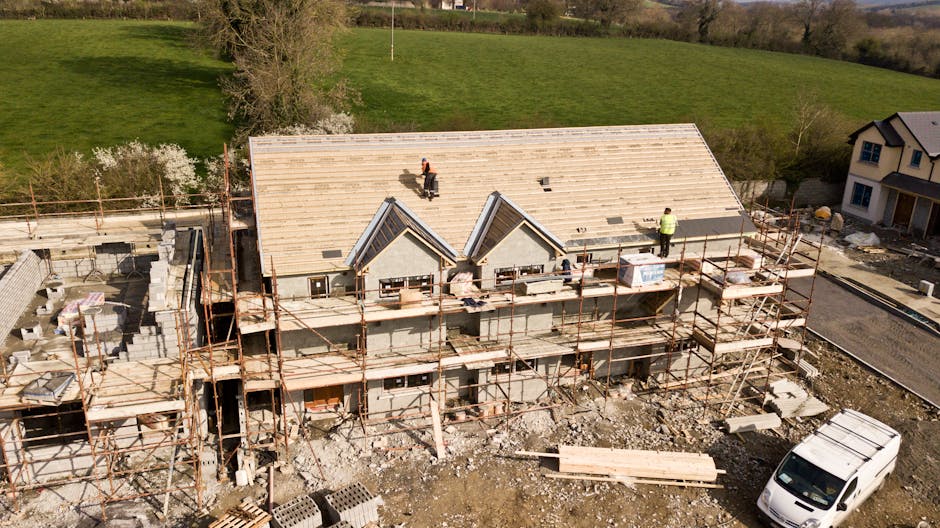
Planning reforms set to boost UK housebuilding to 305,000 completions by 2029


The UK government's planning overhaul is poised to deliver a significant uplift in housing supply over the coming years. According to Office for Budget Responsibility projections, annual completions could rise from 244,000 homes in 2024 to approximately 305,000 by 2029—a transformation that would mark the most substantial increase in new-build delivery since the early 2000s.
For property professionals, investors, and developers, understanding where this growth will materialise is essential for identifying opportunity and managing risk.
The planning pipeline today
REalyse data shows considerable variation in residential planning activity across the country. Central London continues to lead with over 1,700 private housing applications submitted in the past twelve months, proposing more than 28,000 new units. Essex and Greater Manchester follow with substantial pipelines of their own, each with more than 17,000 units in the planning system.
What's notable is the geographic spread of development ambition. Areas such as Hertfordshire, Leicestershire, and Oxfordshire show pipelines exceeding 18,000 proposed units each—signalling that growth pressure extends well beyond traditional urban cores into commuter belts and regional centres.
Approval rates vary significantly by location. Some regions show approval-to-refusal ratios of 3:1 or better, while others face considerably more restrictive planning environments. For investors and developers, these local dynamics matter enormously when assessing site viability and project timelines.
New-build market composition
Current transaction data reveals how new-build supply is distributed across property types. Detached houses account for the highest new-build share at nearly 13% of all detached transactions, reflecting developer preference for higher-value product in suburban and greenfield locations. New-build flats represent around 8% of flat sales, with average prices of approximately £472,000—often concentrated in urban regeneration schemes and build-to-rent projects.
Semi-detached and terraced new-builds comprise smaller market shares at 6.25% and 2.4% respectively, suggesting that the volume housing market remains dominated by existing stock. If the government's targets are to be met, expanding delivery of these mid-market family homes will be crucial.
Rural tensions and permitted development
The reforms enabling these ambitious targets include expanded permitted development rights—allowing certain conversions and developments without full planning permission. While this accelerates delivery, it has sparked significant concern in rural communities.
Campaigners worry that looser controls could lead to inappropriate development in Areas of Outstanding Natural Beauty, Green Belt edges, and village settings where infrastructure may not support rapid growth. The tension between housing need and countryside protection remains politically charged, particularly in constituencies where agricultural land and rural character are defining features.
For developers, navigating this landscape requires careful attention to local sensitivities. REalyse planning data can help identify areas where pipeline activity is already accepted versus locations where opposition may delay or derail schemes.
What this means for the market
A sustained increase to 305,000 completions annually would have meaningful implications across the property sector:
• For investors: More new-build stock entering the market could moderate price growth in high-supply areas, while regions with constrained pipelines may see continued upward pressure. Build-to-rent operators will find expanded opportunity in areas with strong planning momentum.
• For lenders: Increased development activity creates greater demand for development finance, but also requires robust appraisal of local market absorption rates. Areas with large pipelines relative to transaction volumes warrant careful monitoring.
• For agents: New-build completions will compete with existing stock for buyers. Understanding local pipeline composition—whether dominated by flats, family houses, or mixed schemes—helps position advice and marketing strategies.
Outlook
The path from 244,000 to 305,000 completions is not guaranteed. Labour shortages, material costs, interest rate pressures, and planning delays all pose risks to delivery. However, the policy direction is clear, and the planning pipeline already shows substantial committed activity.
Property professionals who track this data—understanding where units are proposed, which schemes are progressing, and how local markets are absorbing new supply—will be better positioned to advise clients and identify emerging opportunities. The reforms represent one of the most consequential shifts in UK housing policy in a generation.