Commonhold revolution: how leasehold reform will reshape flat ownership and new developments in England and Wales


Introduction: a generational shift in flat ownership
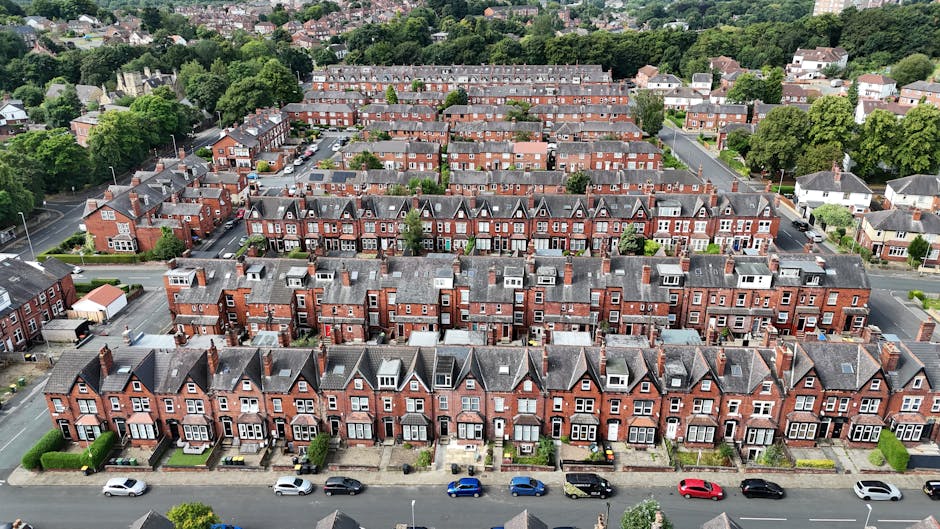
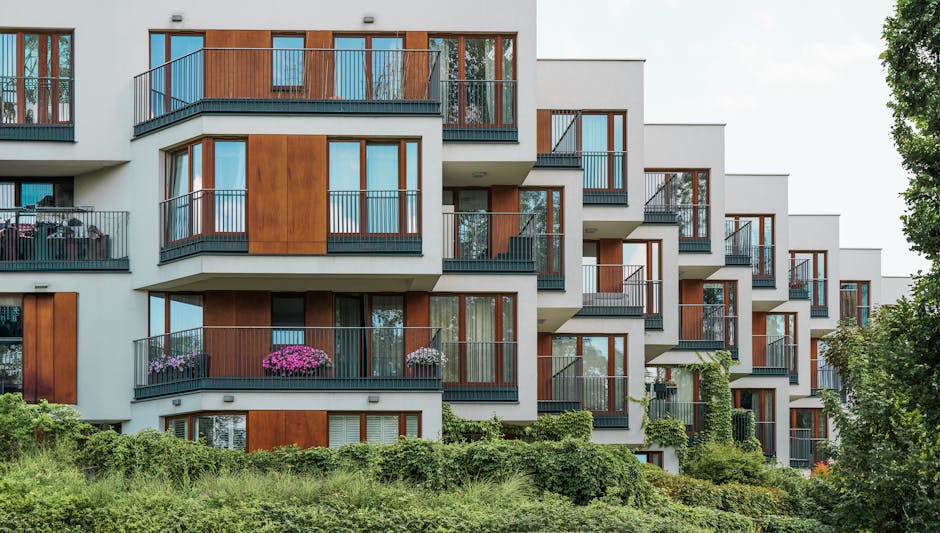
Leasehold has long been the dominant tenure for flats in England and Wales, a system that grants buyers a diminishing asset rather than outright ownership. Government data and REalyse analysis shows that approximately 20% of all registered land parcels in England and Wales—nearly 5.8 million properties—are held on leasehold tenure. The vast majority of these are flats.
The Leasehold and Freehold Reform Act 2024, followed by further Government commitments in 2025 to ban the sale of new leasehold flats entirely, signals the end of this centuries-old system. Commonhold, a form of freehold ownership where flat owners collectively own and manage the building through a commonhold association, will become the default for new developments. For investors, developers, lenders and buyers, the implications are profound.
The scale of change: millions of properties, thousands of new schemes
Understanding the reform's impact requires grasping the sheer scale of leasehold in the UK property market. REalyse data indicates that of the approximately 28.7 million registered land parcels in England and Wales, around 5.76 million are leasehold—representing one in five properties. While leasehold also applies to some houses (particularly in the North West), the overwhelming majority of leasehold titles are flats.
The development pipeline tells a parallel story. Analysis of planning applications for new apartment and flat schemes shows consistent activity, with an average of around 2,600 new flat development applications submitted annually between 2021 and 2025. After a dip in 2024 to approximately 1,900 applications, submissions recovered to around 2,500 in 2025—suggesting developer appetite for flatted development remains strong despite regulatory uncertainty.
The Build-to-Rent (BTR) sector adds another dimension. REalyse data identifies over 800 BTR flat schemes at various stages of the planning process, with more than 650 having secured planning consent. These institutional investors, who typically retain ownership rather than sell units, will need to navigate the new commonhold framework even when they hold all units in a development.
Financing and mortgage lending: recalibrating risk
The transition to commonhold introduces significant questions for mortgage lenders. Under leasehold, lenders have decades of experience valuing diminishing assets, assessing ground rent liabilities, and understanding freeholder obligations. Commonhold presents a different risk profile.
Lenders will need to assess the financial health of commonhold associations, evaluate reserve fund adequacy, and understand the collective decision-making processes that govern major repairs and improvements. Unlike a corporate freeholder, a commonhold association is controlled by individual flat owners—some of whom may be owner-occupiers, others investors, with potentially diverging interests.
The lack of a UK commonhold track record compounds the challenge. While commonhold has existed since 2002, fewer than 20 developments have used it. Lenders will look to international models—particularly from Australia, the United States and parts of Europe—but UK-specific precedents remain thin.
Industry bodies including UK Finance and the Building Societies Association are already developing guidance, but the transition period will likely see some lenders adopt a cautious approach, potentially affecting mortgage availability or pricing for early commonhold schemes.
Mixed-use developments: the commercial complexity
Perhaps the most technically challenging aspect of commonhold reform concerns mixed-use buildings—developments combining residential flats with ground-floor retail, offices, or other commercial uses. These schemes, common in urban centres and increasingly popular in suburban high streets, represent a significant portion of new flatted development.
Under leasehold, a single freeholder can manage the sometimes competing interests of residential and commercial occupiers. Ground rent income from commercial units often subsidises building management, while the freeholder bears ultimate responsibility for the structure and common parts.
Commonhold complicates this dynamic. If residential flat owners form the commonhold association, how do commercial tenants participate in building governance? How are service charges allocated between fundamentally different uses? What happens when the residential majority votes against expenditure that commercial occupiers consider essential?
The Law Commission's 2020 recommendations proposed "sections" within commonhold to separate residential and commercial parts, but the detailed regulations remain under development. Developers of mixed-use schemes in the pipeline are watching closely, with some reportedly delaying planning submissions until the framework is clarified.
Service charges and building management: from complaint to control
For existing leaseholders, service charge disputes and opaque management practices have been among the most contentious aspects of the system. REalyse data on asking prices and achieved values shows that flats in buildings with high service charges or known management issues often trade at discounts to comparable properties.
Commonhold promises greater transparency and control—flat owners collectively decide on expenditure, appoint (or dismiss) managing agents, and set their own reserve fund contributions. However, this democratic structure creates its own challenges.
Commonhold associations will need robust governance frameworks, clear dispute resolution mechanisms, and sufficient expertise to manage buildings that may contain dozens or hundreds of units. The experience of resident management companies under leasehold offers some lessons, but the legal and financial responsibilities under commonhold are more extensive.
The Government has indicated that new secondary legislation will mandate minimum standards for commonhold association governance, reserve fund levels, and owner obligations. Getting this framework right will be critical to the reform's success.
Developer business models: adapting to a new reality
For housebuilders and developers, the ban on new leasehold flats eliminates a revenue stream—ground rents—that has been capitalised, traded, and used to cross-subsidise development costs. While recent reforms had already restricted ground rents on new leases to peppercorn levels, some developers had structured their schemes around eventual freehold sales.
The shift to commonhold requires developers to think differently about scheme economics. Build costs may need to be recovered entirely through unit sales prices, without the deferred income that ground rent portfolios once provided. This may influence unit mix, specification levels, and target price points.
Conversely, commonhold may prove attractive to buyers who have grown wary of leasehold's reputational baggage. Marketing new flats as "freehold equivalent" commonhold, free from escalating ground rents and onerous lease terms, could command a premium. Some developers may find that commonhold actually supports stronger sales values—though this remains to be tested at scale.
The BTR sector presents a different calculation. Institutional investors building to hold will form commonhold associations where they own all or most units. When they eventually sell individual flats, they will transfer commonhold units rather than grant leases. This may simplify exit strategies while requiring new approaches to managing buildings during the operational phase.
Outlook: from transition to transformation
The commonhold revolution will not happen overnight. Existing leasehold flats—nearly 6 million properties—will remain leasehold, though separate reforms make it easier and cheaper for leaseholders to extend leases, buy freeholds, or collectively enfranchise. The Law Commission has also recommended a pathway for existing buildings to convert to commonhold, though this requires unanimous consent and remains practically complex.
For new developments, the transition will be phased. Government has indicated that regulations will come into force within this Parliament, with detailed guidance expected throughout 2026 and 2027. Developers with schemes currently in the pipeline will need to track these developments closely, potentially revisiting legal structures, sales documentation, and financing arrangements.
REalyse will continue to monitor the development pipeline, tracking how new flat schemes adapt to commonhold requirements and how the market responds to the first wave of commonhold completions. For investors evaluating residential development opportunities, understanding the tenure implications has never been more important.
The leasehold system served its purpose for centuries, but its time is ending. Commonhold offers the promise of genuine ownership, transparent management, and collective control—if the details can be made to work. The next two years will determine whether that promise is fulfilled.