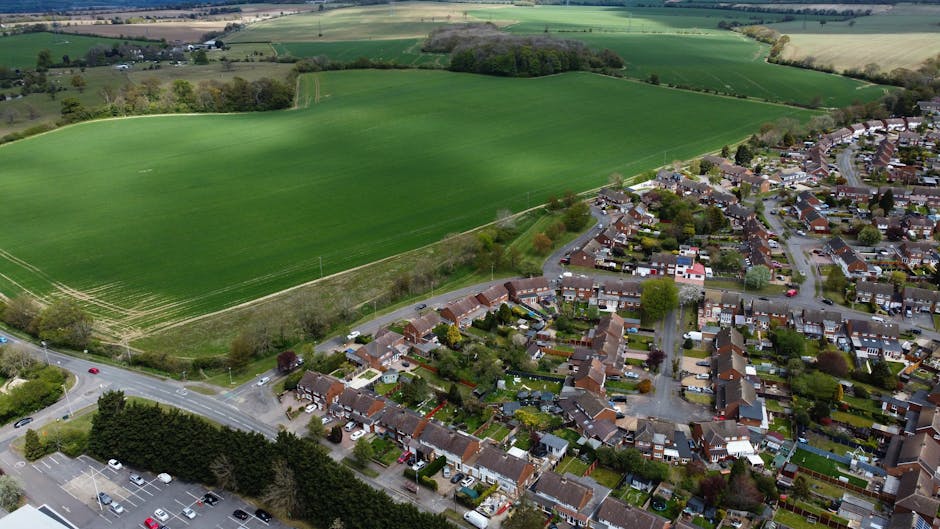
Build-to-rent's £2.5 billion bet on single-family homes signals suburban shift


The UK's build-to-rent sector is placing its biggest bet yet on suburban single-family homes. With an estimated £2.5 billion flowing into houses and bungalows outside London, institutional landlords are pivoting away from the city-centre apartment blocks that defined BTR's first decade. The catalyst? A perfect storm of regulatory change, shifting tenant demand, and surprisingly competitive yields in regional markets.
Section 21 abolition reshapes the playing field
The Renters' Rights Act has finally put an end to no-fault evictions in England. For institutional investors, this regulatory certainty is paradoxically good news. While amateur landlords exit the market—the English Private Landlord Survey suggests over 30% plan to reduce their portfolios—professional operators view the new regime as a competitive moat.
Single-family BTR operators are particularly well-positioned. Their typical tenants—families with children, often staying three to five years—align naturally with the new security of tenure requirements. Purpose-built rental communities with on-site maintenance and professional management become even more attractive when compared with shrinking private landlord supply.
REalyse data shows landlord sell-offs are already visible in rental listings. Family-sized properties (three bedrooms or more) in the North East posted year-on-year rent increases of over 5% for detached homes, while the South East saw asking rents fall by up to 7% as supply from exiting landlords temporarily exceeded demand. This divergence is precisely what institutional capital is chasing: undersupplied suburban markets with structural demand.
Northern regions lead the rental growth story
Analysis of family home rental trends across the UK reveals a clear north-south divergence. Average asking rents for detached three-bedroom-plus properties range from around £1,470 in the North East to nearly £2,920 in the South East—but momentum tells a different story.
Regional rental snapshot (3+ bedroom family homes, 12-month average):
• North East England: Detached homes at £1,472/month with 5.1% annual growth; semi-detached letting within 39 days
• North West England: Detached at £2,022/month, up 2.4%; over 8,200 semi-detached listings in the past year
• Yorkshire and the Humber: Detached rents of £1,578/month, rising 2.4%; nearly 6,900 terraced listings
• West Midlands: Detached at £1,761/month with modest 1% growth; strong volume of nearly 7,700 semi-detached listings
• Scotland: Detached homes at £1,801/month, up 1.8%, with the shortest time to let at under 35 days for terraced properties
The South East and South West, by contrast, are experiencing rental corrections of 2–7%, likely reflecting both affordability ceilings and increased supply from landlord disposals. For BTR developers, this northern tilt offers a compelling combination: lower land costs, rising rents, and less competition from build-to-sell housebuilders retreating from Help to Buy's end.
The suburban pipeline takes shape
REalyse planning data reveals the scale of institutional ambition outside London. Across 64 counties and metropolitan areas, single-family BTR schemes are progressing through planning and construction, with several regions showing substantial activity:
Key regional pipelines (houses and bungalows, BTR-designated):
• Cambridgeshire: Nearly 8,800 units under construction with over 1,000 approved
• Warwickshire: Approximately 6,700 units in construction
• Hampshire: Over 3,800 units building out, with nearly 1,900 approved
• Greater Manchester: Almost 2,000 under construction and 4,800 approved—the largest approval pipeline outside the South East
• Berkshire: 2,500 units in construction with 1,900 approved and a further 600 in planning
Regions like Bedfordshire, Hertfordshire, and Kent show pipelines of 700–1,500 units under construction, suggesting commuter-belt locations remain attractive despite higher land values. The West Midlands and South Yorkshire each have over 3,400 approved units awaiting construction starts.
This pipeline concentration in university towns, logistics corridors, and commuter zones reflects a clear thesis: families priced out of home ownership, or choosing flexibility, want the space and community of suburban living without the responsibilities of owning.
What this means for the rental market
The entrance of institutional capital into suburban family rentals will reshape local markets in several ways.
Quality standardisation: Purpose-built rental homes typically exceed minimum EPC requirements, include smart-home technology, and offer amenities from parcel storage to pet-friendly policies. Private landlords operating single Victorian terraces cannot easily match this proposition.
Pricing dynamics: While some fear institutional landlords will push rents higher, initial evidence is mixed. REalyse data shows asking rents stabilising or falling in several regions despite supply constraints, suggesting tenants have affordability limits that operators must respect. Days on market averaging 39–47 days across regions indicates neither a frenzy nor a slump.
Community creation: Developers like Sigma Capital, Goldman Sachs-backed platforms, and insurance-backed funds are building entire streets and villages for rent. This differs fundamentally from scattered acquisitions. Tenant communities, shared green spaces, and integrated management may prove more resilient than fragmented private rented stock.
The risks remain real
Single-family BTR is not without headwinds. Construction cost inflation, higher interest rates, and planning delays all squeeze returns. The viability gap—the difference between development cost and stabilised value—remains challenging in some locations. Operators must also navigate local authority attitudes: some councils welcome institutional supply, while others fear it displaces owner-occupied housing.
Outlook: a structural shift, not a cycle
The £2.5 billion flowing into single-family BTR represents more than a tactical trade. It signals recognition that the UK's rental market is permanently larger, that family tenants deserve purpose-built options, and that suburban locations can deliver institutional-grade returns.
With Section 21 gone and landlord exits accelerating, the gap between professional and amateur provision will widen. Markets like Greater Manchester, Cambridgeshire, and the West Midlands—where pipelines are deepest and rental growth positive—look set to lead this transformation.
For investors, operators, and policymakers alike, the question is no longer whether institutional capital will reshape suburban rentals, but how quickly and at what scale. The next five years will tell whether single-family BTR becomes a niche within a niche, or the dominant model for a generation of families who rent by choice or necessity.