Build-to-rent flagships gain momentum as UK for-sale market stalls


A market splitting in two
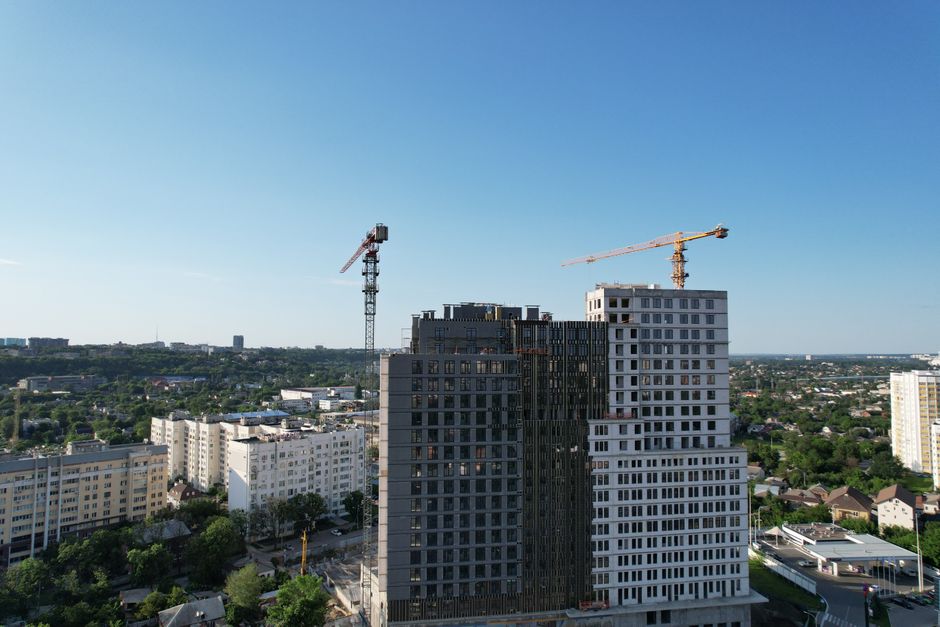
UK residential real estate is increasingly telling two different stories at once. On one side, build-to-rent (BTR) is consolidating its position as a mainstream institutional asset class, with flagship schemes securing planning consent and forward-funding commitments across London and the regions. On the other, the for-sale market — particularly new-build and off-plan activity — is showing the kind of friction that typically signals a slowdown: extended time on market, thinning discounts that suggest buyer caution rather than confidence, and softer transaction volumes in higher-value segments.
This isn't a story of rental housing simply outperforming sales housing. It's a structural rebalancing. Institutional capital is stepping into a supply gap left by financing pressure on traditional housebuilders and individual landlords exiting the private rented sector, while flagship BTR developments increasingly function as the visible proof point that this capital is willing to commit at scale, even when broader housing delivery is under strain.
Where BTR approvals are concentrating
REalyse planning data over the past five years shows granted build-to-rent applications heavily concentrated in a handful of regions. London leads by a wide margin, with over 14,000 approved BTR units across 58 granted applications — consistent with its status as the UK's largest and most mature BTR market. But the more interesting story is regional: the West Midlands has approved close to 11,800 BTR units across 40 applications, and Yorkshire and The Humber has secured nearly 8,900 units across 43 applications, putting both regions ahead of the South East on approved volume.
The North West follows closely with over 8,300 granted units, reinforcing Manchester's reputation as the UK's largest single regional BTR market. Scotland has also built meaningful momentum, with close to 5,800 approved units, while Wales and Northern Ireland — though smaller in absolute terms — are seeing their first flagship-scale schemes move through planning.
Two things stand out in this dataset. First, approval activity is genuinely national, not just a London and Manchester story — the West Midlands and Yorkshire numbers show BTR capital following yield and demographic fundamentals into secondary cities. Second, London alone still carries a further ~10,000 units categorised as "in progress" through planning, alongside similarly sized in-progress pipelines in the North West and Yorkshire, suggesting the next wave of flagship approvals is already queued up rather than slowing down.
This regional spread matters for how developers and investors should read the opportunity. Historic BTR strongholds like London and Greater Manchester have accounted for roughly two-thirds of existing completed stock, but a majority of units currently under construction sit outside those two markets — a signal that the next phase of institutional delivery is increasingly a regional cities story.
Institutional capital is following the approvals
The planning pipeline is being matched by capital. UK BTR investment reached roughly £5.3 billion in 2025 according to sector research, with completed stock nationally passing 146,000 homes — up over 13% year-on-year — and a further ~50,000 units under construction. Forecasts point to investment exceeding £5.7 billion in 2026.
Single-family rental has been the standout within that total, attracting over £3 billion in 2025 alone — a 28% increase on 2024 and its highest annual share on record. That shift reflects investors' preference for lower-density, suburban rental product with simpler construction risk, at a time when high-density multifamily and co-living schemes face tighter viability. For developers with suitable land, this is opening forward-funding conversations that weren't available even eighteen months ago.
Major institutional names — Legal & General, Greystar, Grainger, Quintain and Moda Living among them — continue to expand portfolios, while headline transactions such as large-scale PRS portfolio acquisitions in London show scale conviction even as construction starts have softened nationally. That's the paradox worth sitting with: approvals and investment are rising, but new construction starts have now trailed completions for eight consecutive quarters, and starts in London specifically have fallen sharply since 2022. The pipeline isn't stopping — it's pausing for financing and cost certainty before the next wave of flagship schemes breaks ground.
Strain building in the for-sale market
Against that backdrop, the traditional for-sale market is showing signs of fatigue. REalyse transaction and listings data over the past three years shows average days on market sitting well above 90 days for most property types, with detached and bungalow stock — typically the segments most reliant on discretionary, mortgage-dependent buyers — taking noticeably longer to transact than flats or terraced housing. Asking-to-achieved price discounts have also been trending in a direction that points to more cautious pricing power among sellers, particularly for higher-value detached and bungalow stock, compared with tighter, faster-moving segments like terraced housing.
New-build listing volumes tell a complementary story. While new-build stock has continued to reach the market across property types, the relative share of new-build within total listings has fluctuated quarter to quarter rather than showing the sustained growth institutional forward-funders would want to see from traditional housebuilding. That's consistent with wider industry commentary on housebuilders facing planning, financing and cost inflation pressures that are constraining site starts — the same headwinds, in effect, that are also tempering BTR construction starts, just showing up on the sales side as softer new-build listing momentum and longer marketing periods.
Taken together, these indicators point to a for-sale market that hasn't collapsed, but is characterised by longer sales cycles and less pricing conviction — a backdrop against which institutional BTR capital, offering more predictable delivery economics and long-term income, looks comparatively more attractive to landowners weighing disposal options.
What this means for developers, investors and lenders
For landowners and housebuilders, the rebalancing creates a genuine alternative exit route. Sites that might once have been pursued purely for open-market sale are increasingly viable candidates for forward-funded BTR disposal, particularly in regional cities where REalyse planning data shows strong approval momentum — the West Midlands, Yorkshire and the North West stand out as districts where institutional appetite is demonstrably following through into granted consent.
For investors and lenders, the data suggests underwriting discipline should account for two distinct demand curves rather than one. Comparables and yield assumptions built purely on for-sale price trends risk understating the strength of rental fundamentals in the same postcode districts — REalyse-style rental yield and comparables data is essential to avoid conflating a slower sales market with weaker overall housing demand.
For agents and advisors, understanding institutional requirements — lot sizes, tenure structures, ESG credentials — is becoming a more valuable part of the advisory conversation, as BTR disposals and forward-funding deals grow in scale and frequency across regional markets that historically saw little of this activity.
Outlook
The UK residential market isn't slowing uniformly — it's diverging. Flagship BTR schemes are proving that institutional capital will commit at scale to well-located, well-planned rental product, even while traditional for-sale housebuilding navigates financing pressure and softer buyer conviction. The regions best positioned through 2026 will be those where planning authorities, landowners and institutional investors are already aligned — and REalyse's planning, transaction and yield data offers the clearest way to identify exactly where that alignment is strongest before the next wave of flagship approvals breaks ground.