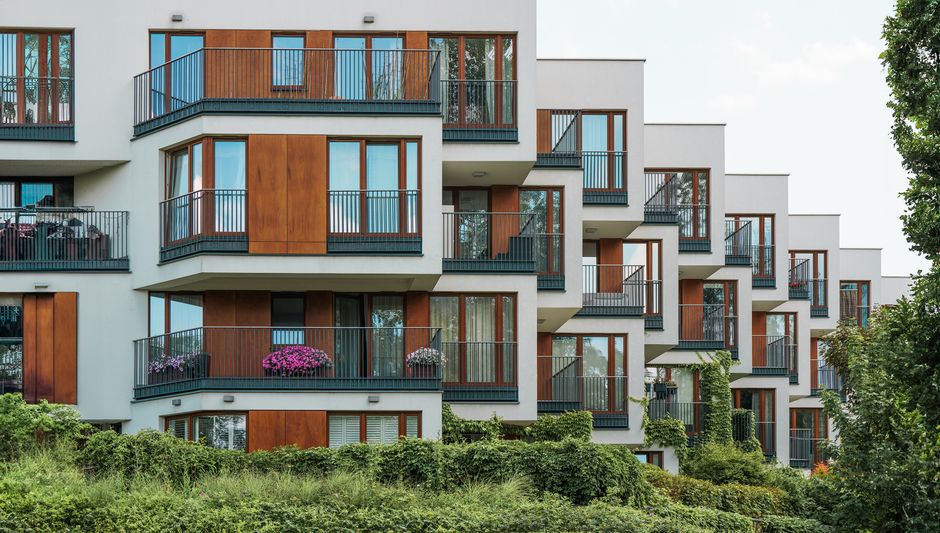
Build-to-rent deliveries double as flagship schemes gain approval under the new planning regime


A pipeline finally turning into delivered stock
Build-to-rent has spent the best part of a decade as the sector perpetually "about to arrive." That moment appears to have passed. REalyse planning data tracking BTR-flagged schemes shows annual completions climbing from 3,205 units in 2018 and 6,835 in 2019 to 11,469 in 2023 and 13,398 in 2024 - roughly double pre-pandemic output, delivered consistently rather than as a one-off spike.
The dip to 5,334 units in 2022 lines up with the broader construction slowdown driven by material costs, interest rate rises and contractor insolvencies that hit the whole residential sector, not just BTR. What's notable is the recovery: 2023 and 2024 both cleared 11,000+ units, and early figures for 2025 suggest completions are holding near that higher plateau rather than reverting to pre-pandemic norms. For an asset class that institutional investors were still treating as "emerging" five years ago, that's a meaningful maturity signal.
Flagship approvals are getting bigger, not just more frequent
The growth story isn't only about volume - it's about scale per scheme. REalyse's planning database shows several BTR-flagged applications securing approval in the past 18 months with unit counts that would have been unusual even at the height of the last BTR boom:
• Winstanley & York Road Estate, Wandsworth (London) - approved with 2,550 units, one of the largest single regeneration-linked BTR consents in the capital
• Slough Central Masterplan - 1,601 units approved, reflecting continued institutional interest in Thames Valley commuter towns
• Hurst Wood, Doncaster - 1,401 units, evidence BTR delivery is no longer confined to the traditional "big six" cities
• Water Lane, Exeter - 1,400 units, a notable scale for a regional city outside the usual investor shortlist
• Cowcaddens, Glasgow - 1,266 units, part of a broader cluster of Glasgow approvals (Glasgow's total BTR pipeline now sits close to 14,500 units across 33 schemes)
Consents of this size typically require patient capital, forward-funding structures and planning teams comfortable navigating affordable housing contributions and design code requirements under the revised National Planning Policy Framework. That several have now cleared committee in the same 18-month window suggests local authorities are becoming more comfortable approving large single-management-company schemes - a shift lenders and investors underwriting future pipeline should factor into risk assumptions on approval timelines.
Where the pipeline is concentrating
REalyse pipeline data (schemes either granted or still in progress) shows BTR remains heavily London-weighted but is diversifying:
| City / area | BTR schemes | Units in pipeline |
|---|---|---|
| London | 189 | 105,499 |
| Manchester | 77 | 35,969 |
| Birmingham | 64 | 30,826 |
| Barking | 9 | 25,725 |
| Leeds | 54 | 21,803 |
| Salford | 39 | 15,353 |
| Glasgow | 33 | 14,540 |
London alone accounts for roughly a third of national BTR pipeline volume, but the concentration in Barking - just 9 schemes delivering over 25,000 units - illustrates how a small number of large-scale, single-site regeneration schemes can reshape a local authority's rental supply almost overnight. For developers and lenders assessing competitive saturation risk, this matters: a market like Barking could see its private rental tenure mix shift materially within a single delivery cycle, while more fragmented pipelines (Leeds, Sheffield, Bristol) will see supply land more gradually across many smaller operators.
What this means for renter choice and rental performance
Institutional stock isn't just changing supply volume - REalyse rental listings data shows it commands a measurable premium and, in some segments, a modestly better yield profile than traditional private rental stock:
| Property type | Segment | Avg asking rent (£/sqft, annualised) | Avg gross yield |
|---|---|---|---|
| Flat | BTR | £38.25 | 6.16% |
| Flat | Non-BTR | £31.36 | 5.77% |
| House | BTR | £20.02 | 6.19% |
| House | Non-BTR | £19.83 | 5.74% |
The rent premium is most visible in flats (roughly 22% higher £/sqft for BTR versus traditional private rental stock), likely reflecting the amenity-rich, professionally managed nature of purpose-built schemes - on-site management, communal space, and longer tenancy security that renters appear willing to pay for. The yield gap is narrower but consistently positive across both flats and houses, which should reassure institutional investors weighing BTR against traditional buy-to-let acquisition on a pure income-return basis.
For renters, the practical effect is more genuine choice at the professionally managed end of the market - previously the preserve of a handful of major cities - now extending into places like Doncaster, Exeter and Middlesbrough where flagship-scale schemes have just been approved.
Outlook
The doubling in delivery volumes since 2019, combined with a run of large flagship approvals across a widening set of cities, points to BTR moving from a London-and-Manchester niche into a genuinely national delivery model. The next test is whether approval momentum in secondary cities converts into completions at the same pace seen in the established markets - and whether the rent and yield premium BTR currently commands holds up as supply scales. For investors, lenders and developers tracking specific local authorities, granular planning and comparable rental data will be essential to spot where the next concentration of supply - and competitive pressure - is building.