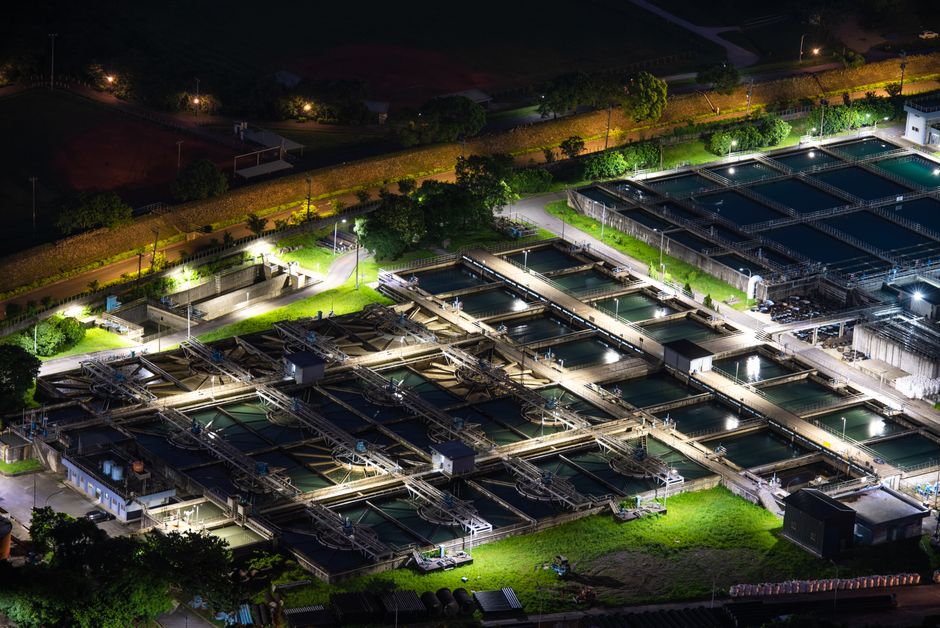
Water scarcity becomes the housebuilding sector's next planning bottleneck


A new constraint on the housebuilding map
For years, the barriers to delivering new homes in the UK have been familiar: land availability, planning delays, construction cost inflation, and nutrient neutrality rules in catchments such as the Solent and the Wye. Water scarcity is now joining that list as a distinct and growing constraint, particularly across parts of eastern and southeastern England where water companies and the Environment Agency have flagged supply-demand pressure well before mid-century.
This matters directly to the government's ambition to deliver 1.5 million homes over this Parliament. Housebuilding targets are set nationally and cascaded to local authorities, but water availability is managed regionally by water companies operating under abstraction licences that were not designed with today's scale of housing delivery in mind. When those two planning systems collide, permissions can stall regardless of how strong the underlying land economics look.
For institutional investors, developers and lenders, this is not an abstract policy debate. It is a due diligence variable that REalyse data suggests is increasingly correlated with planning stage duration and scheme viability in specific local authority areas, particularly across parts of the East of England, the South East, and pockets of the East Midlands where water stress designations overlap with high housing allocations.
Where the pressure is concentrated
Water stress in England is not uniform. The Environment Agency classifies areas of "serious" water stress predominantly across the South East, the East of England, and parts of the East Midlands and Yorkshire — regions that also carry some of the largest local plan housing allocations outside London. Cambridgeshire has become the most cited example, with reports of water companies signalling constrained new-connection capacity in and around Cambridge, an area central to the government's growth corridor ambitions.
Local authorities in these regions are increasingly required to demonstrate "water neutrality" or secure formal confirmation of supply capacity before granting major residential consent — echoing the precedent set by nutrient neutrality rules, which added months (in some cases years) to scheme timelines in affected catchments after 2022. Planning application data tracked through REalyse shows a similar pattern beginning to emerge: schemes in water-stressed local authorities are more likely to carry extended "in progress" or conditional stages, with scheme descriptions increasingly referencing utility capacity, drainage strategy and water company sign-off as conditions precedent.
For developers assessing land in these areas, the practical implication is a longer and less certain path from allocation to start on site. For lenders, it raises the question of whether standard development finance timelines adequately price in this newer form of consent risk.
Reservoir investment and long lead times
Part of the structural problem is that new reservoir capacity — the primary long-term fix — takes over a decade to plan, consent and build. Ofwat and government have approved a small number of new reservoir schemes in England (including in the South East and East Anglia), but none will be operational before the early-to-mid 2030s. In the interim, water companies are relying on demand management, leakage reduction, and, in some cases, moratoria on new connections in the most constrained supply zones.
This creates a mismatch: five-year housing land supply calculations assume delivery rates that water infrastructure investment cycles, running on 15-25 year Asset Management Plan (AMP) periods, cannot always match. Developers with sites in AMP-constrained areas should treat water company capacity statements as a core planning risk alongside grid connection queues, which have already become a well-documented bottleneck for larger schemes.
What this means for valuations, yields and site selection
The commercial consequence is a widening gap between "paper" development value and risk-adjusted value in water-stressed local authorities. Sites with resolution to grant subject to water neutrality conditions, or with drainage and supply capacity still unresolved, arguably warrant a discount to land value comparable to sites carrying nutrient neutrality risk in the Solent or Wye catchments in 2022-23 — where transaction activity in the most affected local authorities slowed measurably until mitigation schemes came online.
For investors underwriting residential-led schemes, this reinforces the case for granular, local-authority-level comparables rather than regional averages when assessing achievable pricing, absorption rates and gross development value. REalyse-style planning pipeline data — tracking scheme status, decision dates and stage duration by local authority — can help identify where water-related conditions are extending timelines beyond the local norm, and where completed schemes have successfully navigated water neutrality mitigation (such as on-site attenuation, greywater recycling, or off-site offsetting) at manageable cost.
Rental and sales comparables in affected areas should also be monitored for early signs of constrained supply feeding through to pricing. If planning-stage bottlenecks meaningfully restrict new completions in high-demand commuter markets such as Cambridge and parts of Essex and Hertfordshire, the medium-term effect could be tighter supply supporting both sale prices and achieved rents — a dynamic worth flagging for buy-to-let and build-to-rent investors screening for resilient yield locations.
Outlook: a planning risk that needs pricing in
Water scarcity is unlikely to halt housebuilding outright, but it is becoming a genuine gating factor in specific geographies, layering onto an already congested planning system alongside nutrient neutrality, grid capacity and biodiversity net gain requirements. The government's growth corridor ambitions, particularly around Cambridge, will test whether infrastructure investment can be sequenced fast enough to keep pace with housing delivery targets.
For developers, lenders and investors, the practical response is the same discipline already applied to nutrient neutrality and grid connection risk: treat water capacity as a named diligence item at site acquisition, track local authority-level planning stage data for early warning signs of stalling, and price land and development finance terms accordingly in the most exposed water-stressed regions.