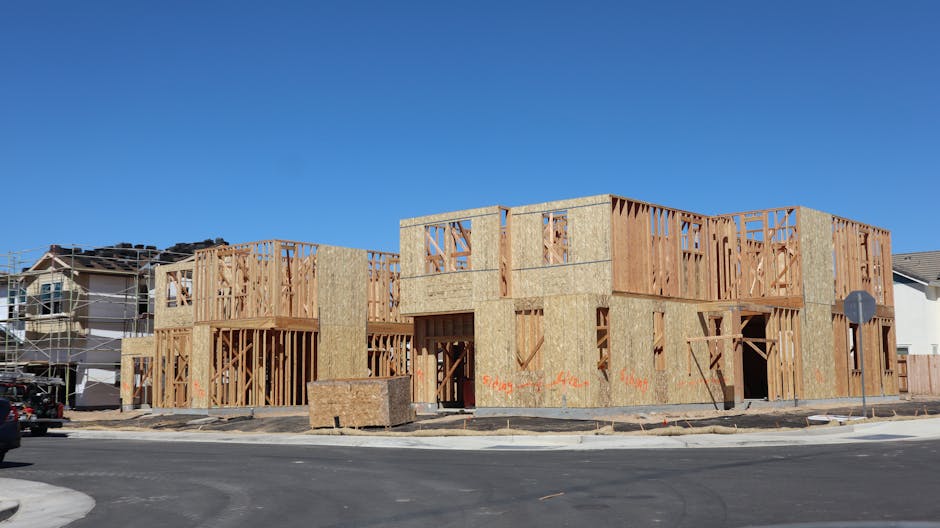
Seven new towns to accelerate English housebuilding: what the government's landmark initiative means for the property market


A bold response to England's housing crisis
England's housing supply challenges have reached a critical juncture. Despite over 26,000 residential planning applications being approved across the country in the past 24 months—delivering consent for more than 736,000 new homes—delivery continues to lag behind the government's target of 300,000 homes per year.
The announcement of seven new towns represents the most ambitious housebuilding initiative in a generation, drawing deliberate comparisons with the post-war new town programme that created Milton Keynes, Stevenage, and Harlow. Unlike piecemeal infill development, these master-planned settlements promise the scale and infrastructure coordination needed to meaningfully address the housing shortfall.
Where the pipeline stands today
REalyse planning data reveals a striking picture of England's current development landscape. The South East (TLJ) leads with over 125,000 residential units granted planning permission in the past two years, followed by London (TLI) with approximately 102,000 units and the East of England (TLH) with a similar figure.
However, the planning pipeline tells only part of the story. Our analysis of active schemes shows:
• Over 128,000 schemes currently in progress across all project sizes
• Large-scale developments (typically 50+ units) account for approximately 3.6 million consented units
• Mega schemes numbering just 630 applications represent over 1.2 million potential homes
This concentration of future supply in larger developments signals that the market is already shifting toward the scale required for meaningful delivery—a trend the new towns programme aims to accelerate dramatically.
Regional market context and investment implications
The new towns initiative arrives against a backdrop of significant regional price variation. REalyse transaction data for the past 12 months shows average sold prices ranging from approximately £605,000 in London to under £180,000 in the North East, with total transaction volumes exceeding 560,000 completions across English regions.
For investors and developers, the key considerations include:
• Land value uplift potential in areas designated for new town development
• Infrastructure-led growth creating rental and sales demand ahead of residential delivery
• Build-to-rent opportunities as new towns will require substantial rental accommodation for incoming workers
The South East and East of England—already the busiest regions for planning approvals—are likely candidates for new town locations given their proximity to London employment markets and existing transport corridors.
Infrastructure: the make-or-break factor
Historical new towns succeeded or struggled based largely on infrastructure timing. The government has indicated that new settlements will be supported by upfront transport investment, schools, healthcare facilities, and employment space—learning from past criticisms that homes arrived before services.
REalyse planning application data shows that larger schemes (those delivering 50+ units) represent nearly 44,000 current applications, many of which include provisions for community infrastructure through Section 106 agreements or Community Infrastructure Levy contributions. The new towns programme would supersede these piecemeal arrangements with comprehensive, government-backed infrastructure funding.
For lenders and institutional investors, this infrastructure commitment provides a more certain delivery pathway than speculative garden village proposals that have struggled to progress without guaranteed connectivity.
What this means for the market
The new towns announcement signals several shifts for property market participants:
For developers: Early positioning near designated new town sites could yield significant land value gains, though locations remain unconfirmed. Strategic land holdings in the South East, East of England, and East Midlands corridor merit particular attention.
For investors: Build-to-rent operators should monitor announcements closely, as new towns will generate substantial rental demand during construction phases and beyond. REalyse data shows BTR schemes already represent a growing share of large-scale planning applications.
For lenders: The infrastructure guarantee reduces delivery risk compared to standard development finance, potentially supporting more competitive lending terms for qualifying schemes within designated growth areas.
Outlook: from ambition to delivery
The seven new towns programme represents a generational opportunity to reshape English housebuilding. With planning approvals across England already consenting over 700,000 homes in the past two years alone, the constraint has never been permission—it has been delivery capacity, infrastructure, and viability.
Whether these new settlements achieve their potential will depend on site selection, political continuity, and the government's ability to coordinate infrastructure investment with housing delivery. For those with patient capital and an appetite for development exposure, the opportunity to participate in England's next chapter of planned settlement building may prove compelling.
REalyse will continue tracking planning activity, land transactions, and market indicators as the new towns programme evolves from policy to reality.