Planning reform and the brownfield push: what Labour's agenda means for UK housing delivery


A system under strain — and a government with a mandate to change it
No policy issue dominated the July 2024 general election campaign quite like housing. With waiting lists for social homes at record levels, homeownership increasingly out of reach for younger generations, and housebuilding running well below the government's stated target of 1.5 million new homes over five years, the incoming Labour administration inherited both a crisis and a political opportunity.
The response was swift. Within months, the government reinstated mandatory housing targets for local authorities, overhauled the standard method for calculating housing need, and introduced the Planning & Infrastructure Bill — a sweeping piece of legislation that, by mid-2026, is still making its way through Parliament but has already begun reshaping the development landscape.
At its heart, the reform programme rests on three pillars: a brownfield-first presumption, streamlined local plan production, and a recalibration of green belt policy through the introduction of a new "grey belt" category for lower-quality green belt land. For developers, investors, and lenders operating in the UK residential market, the implications are significant.
The brownfield imperative: promise vs pipeline reality
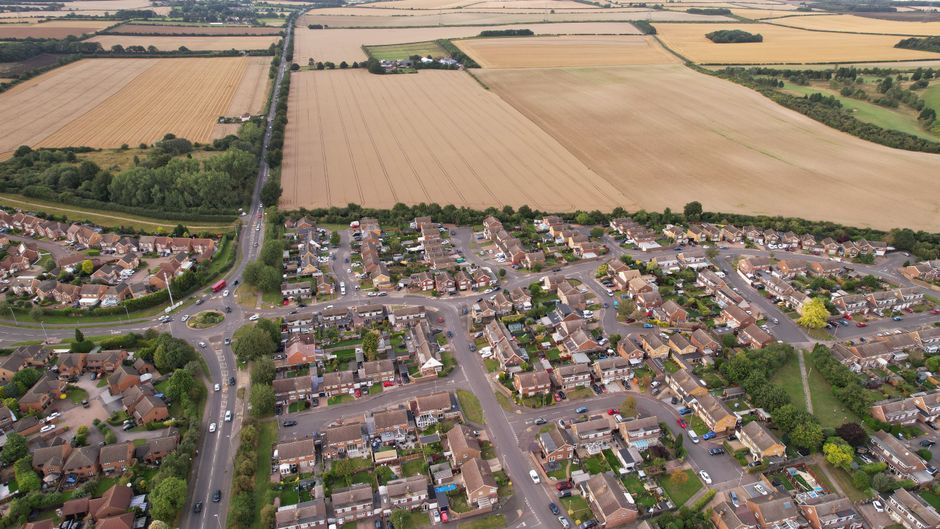
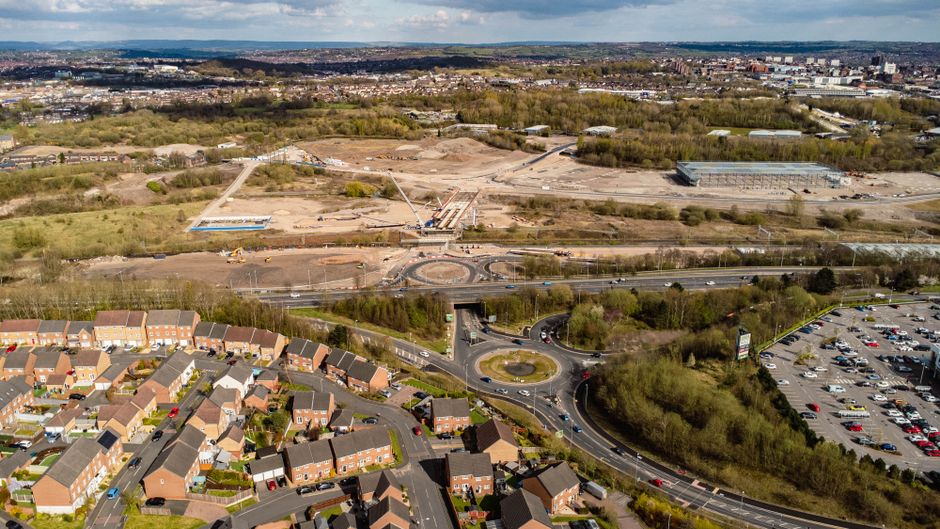
The political appeal of brownfield development is obvious. Building on previously developed land avoids the environmental controversy of greenfield release, tends to align with infrastructure-rich urban locations, and resonates with a public deeply protective of countryside and open space.
Yet REalyse planning data tells a story of mounting tension between policy ambition and pipeline reality. Across the UK's approved residential planning applications, brownfield sites account for a significant share of application volume — but a strikingly small proportion of the total homes in the pipeline.
Greenfield applications, on average, propose around 36.7 units per application. Their brownfield counterparts average just 7.5 units per application — less than a quarter of the density. The consequence: despite brownfield applications representing well over 40% of approvals by count, they account for a much smaller share of the aggregate units in the pipeline.
This density gap has a simple explanation. Many brownfield applications involve conversions, small infill sites, and urban intensification schemes — individually modest but collectively important. The large-scale schemes capable of moving the national delivery needle tend to be greenfield or mixed urban extensions. Policy that mandates brownfield-first must therefore grapple with this structural asymmetry.
Compounding the issue, REalyse data shows that brownfield planning activity has been on a declining trend since its peak between 2015 and 2017, when applications on previously developed land proposed over 800,000 units in a single year. By 2023, that figure had fallen to fewer than 84,000 units, with a partial recovery visible in 2024 and 2025. Whether the Planning & Infrastructure Bill can reverse this trajectory — by reducing friction, accelerating local plan adoption, and unlocking viability on complex urban sites — is the central question for the reform programme.
Local plans: the reform battleground
For much of the past decade, local plan coverage in England has been dangerously thin. Dozens of councils allowed their plans to lapse or stall, leaving developers to navigate a patchwork of out-of-date policies and creating fertile ground for speculative applications and protracted appeals. According to the Planning Inspectorate, fewer than half of English local authorities had an up-to-date adopted local plan at the time Labour took office.
The new government's approach is to impose a deadline. Under the reformed framework, councils face a mandatory timetable for local plan production, with consequences — including direct government intervention — for those that fail to comply. Combined with the reinstatement of top-down housing targets, this is designed to prevent councils from using the plan-making process as a mechanism for suppressing supply.
For investors and developers using REalyse's planning pipeline data, the practical significance is immediate. A council without an up-to-date plan is less predictable: application outcomes are harder to model, viability negotiations are more protracted, and the risk of appeal — in both directions — is elevated. A system in which more councils maintain current, compliant plans creates a more legible investment environment and, in theory, shorter routes to consent.
The caveat is implementation. Reform that exists on paper but is resisted in practice — through slow plan adoption, resource-constrained planning departments, or political reluctance — will not close the delivery gap. The government has promised additional funding for planning departments and greater use of planning performance agreements, but the sector remains watchful.
The grey belt: opening the green belt debate
Perhaps the most politically charged element of the reform package is the introduction of the "grey belt" — a new designation for land within the green belt that makes a limited contribution to the purposes green belt policy is designed to serve.
Green belt land in England covers approximately 1.6 million hectares, much of it genuinely high-value open countryside. But a meaningful proportion — derelict industrial land, scrubby verges, car parks, low-quality agricultural fringe — contributes little to the landscape, biodiversity, or open space objectives that green belt designation was intended to protect.
REalyse data on planning applications within green belt areas highlights the current state of play. Across the dataset, over 42,000 planning applications have been submitted on green belt land, with an overall approval rate of approximately 67% — a figure that may surprise those who assume the green belt acts as an absolute barrier to development. Approved applications on green belt land encompass over 437,000 residential units, a substantial hidden pipeline that often goes unacknowledged in the public debate.
The grey belt concept is designed to make this process more transparent and systematic. Rather than leaving developers to argue case-by-case that individual parcels meet the "very special circumstances" threshold required for green belt release, the grey belt creates a clearer framework for identifying land that should be brought forward. Councils will be required to identify grey belt sites in their local plans and treat them with a brownfield-equivalent presumption in favour of sustainable development.
The practical effect will vary enormously by geography. In high-pressure markets — particularly around London and the South East, where green belt designation overlaps most acutely with housing need — grey belt release could unlock a significant volume of medium-to-large sites within commuting distance of major employment centres. REalyse comparables data for such areas typically shows achieved sale prices of £450–£600 per square foot or more for new-build residential, making these sites highly viable once planning certainty is established.
In lower-demand markets, the calculus is different. Grey belt designation without accompanying infrastructure investment and developer confidence may not be sufficient to generate delivery.
Affordable housing, viability, and the investor outlook
Reform at the level of local plans and green belt designation matters little if the economics of development remain strained. Viability has been the persistent constraint on brownfield delivery in particular: land remediation costs, build cost inflation, and the burden of Section 106 obligations can render urban sites marginal even where planning consent is achievable.
The government's position is that the new framework — by creating greater certainty, reducing delay, and expanding the pool of developable land — will improve viability across the board. The mandatory affordable housing requirements embedded in local plans are being tightened, with a default position of 50% affordable on grey belt sites where public subsidy has not been required.
For institutional investors and build-to-rent operators, this presents both opportunity and complexity. Greater land supply in accessible urban and peri-urban locations — combined with a rental market in which REalyse data consistently shows supply running well behind demand in most major city regions — supports the case for large-scale BTR investment. Average asking rents across urban England have continued to rise in real terms, and gross yields in many northern and Midlands cities remain in the range of 6–8% for well-located purpose-built schemes, according to REalyse market intelligence.
The risk is that over-prescription of affordable requirements — particularly on constrained brownfield sites where remediation costs are highest — tips the viability balance in the wrong direction and reduces, rather than increases, the number of schemes that proceed.
Conclusion: reform as catalyst, not guarantee
The post-election planning reform programme represents a genuine step change in ambition. Mandatory housing targets, faster local plan production, the grey belt, and a renewed brownfield presumption form a coherent package that — if implemented effectively — could meaningfully accelerate housing delivery over the next decade.
But the REalyse data is a reminder that the planning pipeline and actual delivery are not the same thing. Brownfield applications have been declining for nearly a decade. Local plans remain patchy. And the density of development that brownfield sites can realistically deliver falls well short of what the national housebuilding target demands.
The reforms create the conditions for acceleration. Turning that potential into homes on the ground will require continued investment in planning capacity, a viability framework that works in practice, and sustained political will to resist the inevitable local opposition that large-scale development invariably attracts.
For property professionals tracking where the UK builds next, the planning pipeline has never been more important to monitor — and never more dynamic.