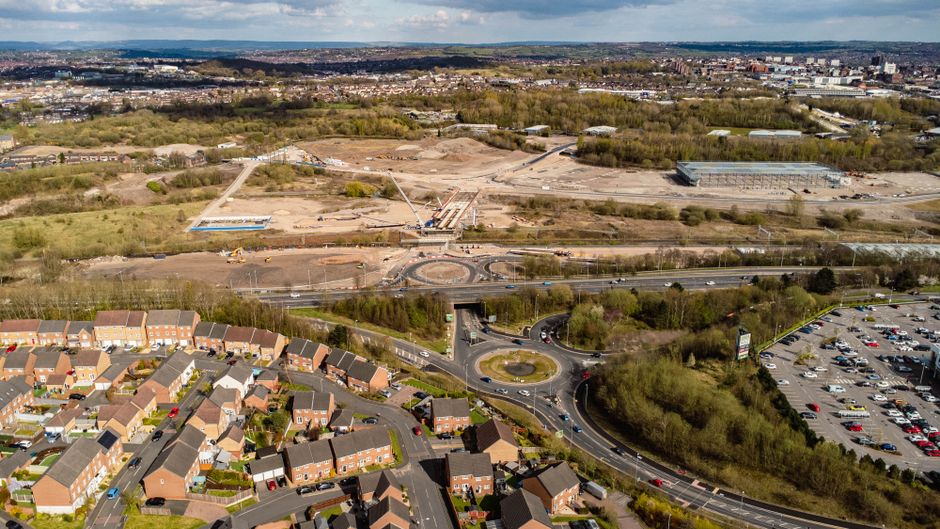
Local plan delays and green belt reviews are reshaping England's housing pipeline in 2026


England's planning system is mid-reformation — and the pipeline is paying the price
The ambition could not be clearer. Labour's first full year in office set the tone: 1.5 million new homes over this Parliament, mandatory housing targets reinstated for every local planning authority (LPA), and the concept of "grey belt" introduced into planning law to unlock lower-quality green belt land for development. The Planning and Infrastructure Bill, advancing through Parliament into 2026, promises streamlined consents, new infrastructure levy arrangements and greater central government intervention where LPAs consistently underdeliver.
The reality on the ground is considerably messier.
A large number of English LPAs — estimates from planning consultancies and the Planning Advisory Service have consistently placed the figure above 50% in recent years — are still operating under local plans that are more than five years old. When the revised National Planning Policy Framework (NPPF) was published in December 2024, it effectively required many authorities to revisit housing need calculations, allocations and green belt boundaries from scratch. The result, in many areas, has been a deliberate or involuntary pause: authorities waiting for the new rules to settle before committing to policies they may need to rewrite again.
For developers and investors tracking live planning pipelines, REalyse data shows meaningful variation across regions in both the number of large residential applications progressing to consent and the timelines from submission to decision — with some LPAs showing materially longer determination periods as their policy base enters limbo.
Grey belt: genuine unlock or long-term pipeline?
The grey belt concept has generated considerable excitement in the land market. Sites previously discounted as untouchable — scrubby urban fringe land, disused golf courses, low-quality agricultural parcels abutting settlement boundaries — are now being reassessed by strategic land promoters and housebuilders alike.
But the pace of release is slower than initial headlines suggested.
For grey belt to be buildable, LPAs must first define what qualifies in their area, a process tied to the ongoing local plan cycle. Authorities that are already mid-review — particularly those in the South East, East of England and parts of the Midlands where housing pressure is greatest — are moving faster. Several have published draft policies identifying candidate grey belt parcels and are running public consultation in 2026. Others, particularly in areas with historically lower housing targets or strong political opposition to development, are lagging.
REalyse planning pipeline data points to a pattern consistent with this two-speed dynamic: the volume of strategic residential applications (typically schemes of 100 units or more) on sites adjacent to current green belt boundaries has increased noticeably in higher-pressure southern markets over the past 12 months, while northern and rural LPAs show little discernible change in fringe-site activity.
Land values on credible grey belt sites are reflecting the optionality. Option agreement premiums and promoted land values on urban-fringe parcels in the South East and Greater London commuter belt are commanding significant uplifts over comparable sites without grey belt status potential — in some cases in the range of 30–60% above equivalent constrained agricultural land, according to strategic land market participants. The risk, of course, is that policy intent does not translate into timely consent, and optioned land sits undelivered.
Housing targets, the delivery test and the lender's perspective
The reinstatement of mandatory, standardised housing targets has a direct and material consequence for LPAs that fall short: if an authority cannot demonstrate a five-year housing land supply, planning policy tips in favour of applicants. This "presumption in favour of sustainable development" is a well-worn developer tool, and in 2026 it is becoming active again in a broader range of authorities than it was during the softer target regime of the early 2020s.
For developers and their lenders, this creates a selective opportunity. Sites in supply-constrained, target-failing authorities can move through consent on appeal more quickly than the local plan pipeline would suggest — but the viability calculus has tightened considerably. Build cost inflation, while moderating from its 2022–23 peak, remains elevated. Infrastructure levy uncertainty is adding a new layer of risk to abnormal cost modelling. And with mortgage rates stabilising but not yet at the lows that would fully re-energise buyer demand, the sales rate assumptions underpinning development appraisals remain under scrutiny.
REalyse comparables and pricing data shows that in many of the LPAs most vulnerable to delivery test failure — typically outer London boroughs, home counties districts and select Midlands authorities — average sold prices per square foot have held up or grown modestly in the 12 months to mid-2026, providing some buffer on gross development value (GDV) assumptions. However, the gap between asking and achieved prices in new-build schemes remains a watch point, and lenders using platform-level data are increasingly benchmarking sales rate velocity as a condition of drawdown.
What local plan delay means for rental and investment markets
The supply squeeze created by planning stasis is not neutral in its effects on the wider residential market. In districts where plan-led housing delivery has slowed significantly, rental supply has tightened and average asking rents have pushed higher. REalyse rental data for a cross-section of plan-delayed LPAs suggests year-on-year asking rent growth in the 6–10% range in some markets, outpacing the national average and compressing affordability metrics further.
For build-to-rent (BTR) and private rented sector (PRS) investors, this creates a double dynamic: yields look attractive on paper — gross yields in several regional cities and commuter towns are running at 5.5–7.5% on stabilised assets according to market data — but the difficulty of getting new supply through a gridlocked planning system is limiting the opportunity set. The developers best positioned to move quickly are those with existing land banks containing sites with extant permissions, or those who have invested in strategic land promotion in areas now undergoing active grey belt review.
The investment community is also watching carefully for how the Planning and Infrastructure Bill's infrastructure levy proposals shake out. If the levy replaces Section 106 obligations as currently proposed, the redistribution of affordable housing contributions and infrastructure costs could reshape viability across a wide range of site types — particularly higher-density urban schemes where the current S106 quantum is a critical part of the deal structure.
Outlook: navigating a system in transition
England's planning system is not broken — it is mid-reformation, and the direction of travel is broadly pro-delivery. But the transition period is creating real friction in the pipeline. The authorities moving fastest to adopt compliant local plans and identify grey belt land will attract the bulk of strategic development activity in 2026 and 2027. Those that delay will see a combination of appeal-driven, unplanned permissions and continued undersupply — neither outcome serving communities or investors well.
For market participants, granular data has never been more important. Understanding which LPAs are supply-constrained, which have active local plan reviews underway, which sites are progressing through the grey belt identification process, and how all of this maps onto achieved prices, rental yields and build costs is the difference between well-underwritten opportunity and expensive misjudgement.
REalyse integrates planning pipeline data, land ownership intelligence, pricing and rental comparables and demographic context precisely to support this kind of evidence-led decision-making — across the full spectrum from single-site appraisal to portfolio-level market strategy.