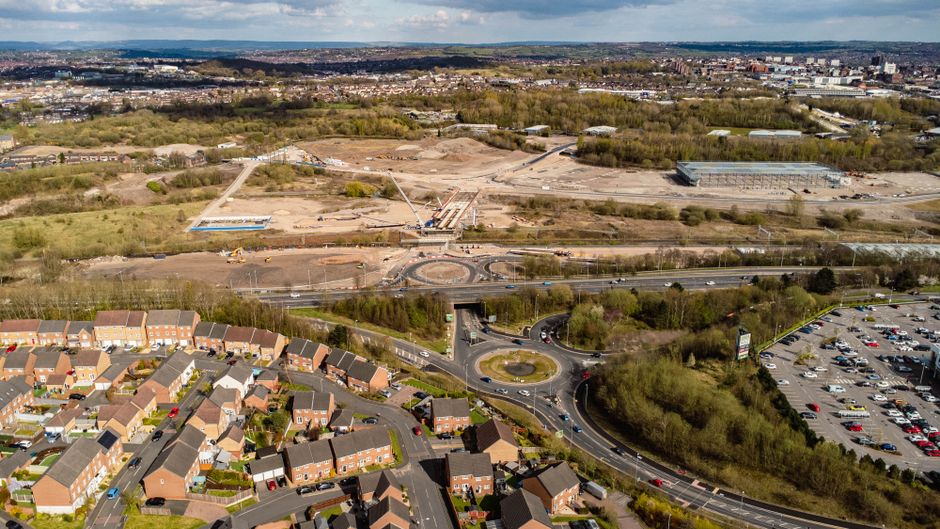
Leeds build-to-rent pipeline surges past £140 million as institutional investors bet big on northern rental growth


Institutional capital finds its northern home
Leeds has emerged as one of the UK's most compelling build-to-rent markets outside London, attracting significant institutional investment as pension funds, insurers and specialist operators seek higher-yielding alternatives to overheated southern markets.
The city's BTR pipeline now includes over 48 schemes of 50 units or more at various stages of planning and construction, with estimated project values ranging from under £10 million to schemes exceeding £200 million. REalyse planning data identifies major developments including the £200 million Bridge Street Phase 2 scheme delivering 678 BTR units, the £148 million Wellington Square development with 464 purpose-built rental homes, and the £140 million Whitehall Riverside project—now completed and letting.
Legal & General and Grainger, two of the UK's largest institutional landlords, have been particularly active in the Leeds market. Their combined commitments, alongside schemes from Moda Living, Caddick and other specialists, are set to approximately double the city's professionally managed rental stock by mid-2026.
Why Leeds? The yield and growth equation
The fundamental investment case for Leeds BTR rests on a combination of attractive yields and sustained rental growth that outperforms many comparable regional cities.
REalyse market data shows flats in Leeds currently achieve gross yields averaging 7.04%, with terraced properties delivering 6.86% and semi-detached homes at 6.37%. These figures compare favourably to yields in Manchester, Birmingham and Bristol, where increased competition and higher land values have compressed returns.
Crucially, these yields are supported by robust rental growth. Average achieved rents for Leeds flats have risen 5.77% over the past twelve months, while semi-detached properties have seen achieved rent growth of 10.39%. Average asking rents for flats sit at £1,079 per month, with achieved rents at £1,006—a relatively modest asking-to-achieved gap that signals realistic pricing and strong tenant demand.
Days on market tell a similar story of a tight rental market. Properties are letting in an average of 40 to 46 days across all types, indicating that new BTR stock should find tenants quickly upon completion.
The pipeline in detail
REalyse planning intelligence reveals a BTR pipeline spanning multiple stages of delivery:
• In Construction: Schemes including Leeds Urban Village (478 BTR units within a 1,016-unit masterplan, valued at £185 million), Triangle Yard (399 units, £72 million), and Temple District (750 units, £350 million) are actively under construction with completions expected through 2026.
• Granted consent: Major consented schemes awaiting construction starts include Bridge Street Phase 2 (678 units, £200 million), Wellington Square (464 BTR units, £148 million), and Aire Park plots R2-R4 (374 BTR units within 418-unit scheme).
• In planning: New applications continue to enter the pipeline, including Sweetfields Phase 2a & 2b proposing 541 BTR units at an estimated £80 million project value.
The concentration of activity in central Leeds—particularly around the South Bank, Holbeck and the Arena Quarter—reflects both strong occupier demand from city centre workers and the availability of development sites from the city's ongoing regeneration programme.
Institutional shift: from London to the regions
The Leeds BTR surge reflects a broader reallocation of institutional capital away from London and the South East. With London yields often falling below 4% and regulatory uncertainty around rent controls in Scotland, English regional cities offering yields above 6% have become increasingly attractive to long-term investors.
Pension funds and insurers in particular favour BTR's inflation-linked income characteristics and long-duration cash flows. Leeds offers additional appeal through its diversified economic base spanning financial services, digital industries, healthcare and higher education—reducing single-sector tenant concentration risk.
The city's strong graduate retention rate from its three universities provides a continual pipeline of young professional tenants, the core demographic for most BTR schemes. Leeds City Council's supportive planning stance towards purpose-built rental development has also removed some of the delivery friction experienced in other cities.
The affordability question
Not all observers are unreservedly positive. Some housing campaigners question whether BTR development adequately addresses Leeds' affordable housing needs, noting that typical BTR rents of £1,000 to £1,300 per month remain out of reach for many local workers.
However, proponents argue that increasing the overall supply of professionally managed rental homes eases pressure across the wider market, and that many BTR operators now include affordable or discount market rent components within their schemes as a condition of planning consent.
Outlook: 2026 and beyond
With multiple large schemes scheduled for completion over the next twelve to eighteen months, Leeds is approaching an inflection point in its rental market. The arrival of several thousand new BTR units will test absorption rates, though current market indicators suggest demand remains robust.
For investors, the key questions centre on construction cost inflation, interest rate trajectories and whether rental growth can be sustained as new supply comes online. For Leeds itself, the institutional BTR boom represents both an opportunity—modern, well-managed rental housing stock—and a challenge: ensuring that the benefits of investment extend across the city's diverse communities.
REalyse will continue tracking Leeds BTR delivery and rental market performance as these schemes progress from pipeline to lettings.