Labour's planning shake-up: can New Towns and grey belt reform finally unlock UK housing delivery?


A planning system under pressure
England's housebuilding numbers have told the same story for years: demand outstripping supply, planning consents taking longer to convert into completions, and a growing gap between what the market needs and what gets built. The government's stated ambition of 1.5 million new homes this Parliament has always required a step-change in how land moves through the system, not just political will.
The March 2026 reform package — building on the National Planning Policy Framework changes introduced in late 2024 — pushes furthest yet into contested territory: reclassifying swathes of "grey belt" land for development, accelerating New Towns consultations, and introducing emergency measures specifically targeted at London's stalled pipeline. For institutional investors, developers and lenders, the question is not whether this changes the map, but how quickly, where, and at what price.
Grey belt reclassification: unlocking land, but not evenly
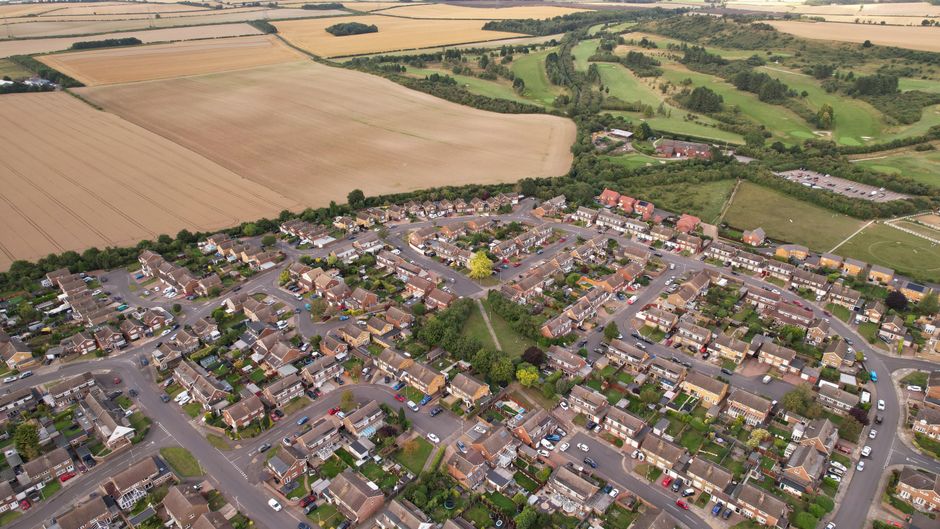
Grey belt — poor-quality, low-value green belt land already meeting the government's own definition of not strongly contributing to green belt purposes — has moved from a policy footnote to a central delivery mechanism. Councils are now expected to actively identify and release grey belt parcels as part of their local plans, rather than treating green belt boundaries as fixed.
REalyse land parcel data, which flags sites by greenbelt and brownfield status alongside planning use class and site area, shows the scale of the opportunity is highly uneven across local authorities. Outer London boroughs and commuter-belt authorities in the South East and East of England sit on disproportionately large tracts of green belt land, much of it low-grade and adjacent to existing transport infrastructure — precisely the profile grey belt reform targets.
For developers and land promoters, this reframes site sourcing strategy. Sites that were previously written off at the land-banking stage due to green belt status now warrant re-screening against the grey belt criteria — proximity to settlements, poor ecological or landscape value, and existing infrastructure access. Lenders underwriting land acquisition should expect a wave of optionality-based deal structures as promoters position ahead of local plan updates, and should stress-test valuations against the real possibility that reclassification timelines slip at the local authority level, where planning capacity remains the binding constraint regardless of national policy intent.
What this means for land values
Historically, land values for green belt parcels adjacent to existing settlements have shown wide dispersion depending on perceived development probability — often trading at a steep discount to allocated or brownfield land per acre. As grey belt designations firm up through local plans, we'd expect that discount to compress fastest for sites near existing transport nodes and demand centres, while land with genuine landscape or ecological constraints remains repriced closer to current agricultural values. REalyse comparables across planning-consented versus unconsented land in the same authority give a practical way to benchmark this repricing as designations are confirmed authority by authority, rather than assuming a uniform national uplift.
New Towns: long lead times, real optionality
The New Towns programme revives a policy tool England hasn't used at scale since the post-war era. Early shortlisted locations span a mix of urban extensions and standalone sites, with delivery timelines that stretch well into the 2030s — a reminder that New Towns are a supply-side strategy measured in decades, not electoral cycles.
For institutional investors with longer investment horizons — pension funds, build-to-rent platforms, and patient capital vehicles — New Towns designations create a distinct category of opportunity: large-scale, masterplanned sites with committed infrastructure funding and a clearer planning trajectory than piecemeal grey belt releases. REalyse's planning pipeline data, tracked by project stage, decision status and unit count, will be essential for monitoring which shortlisted locations convert from consultation to allocated status fastest, and for benchmarking early land assembly activity against comparable large-scale schemes already in the system.
The practical risk for near-term underwriting is timing mismatch: New Towns will not move the 1.5 million homes needle within this Parliament. Their relevance today is in signalling where government is willing to co-invest in infrastructure — a strong forward indicator for land value uplift in the surrounding market even before spades are in the ground.
Emergency measures for London: reversing a supply slowdown
London presents a distinct and more urgent problem. Planning approvals and housing starts in the capital have fallen well short of London Plan targets in recent years, with viability gaps — driven by build cost inflation, affordable housing requirements and section 106 obligations — cited repeatedly by developers as the reason schemes stall post-consent rather than pre-consent.
The emergency measures reportedly under consideration focus on speeding up approvals for stalled consented schemes and revisiting affordable housing viability thresholds on marginal sites, rather than freeing up new land — London's constraint is conversion of consent into delivery, not availability of sites. REalyse's planning stage data is particularly useful here: tracking the volume of units sitting at "granted but not started" status across London boroughs gives a direct read on how much of the capital's shortfall is a viability problem awaiting policy relief versus a genuine site supply problem.
For lenders and investors with exposure to stalled London schemes, this is worth close attention. If viability thresholds are relaxed even modestly, a meaningful share of the current stalled pipeline could re-enter delivery within 12–24 months — materially better economics than waiting for new grey belt or New Towns sites to work through the system. Rental affordability data by borough also matters here: boroughs where rent-to-income ratios are already stretched are the ones where any acceleration in build-to-rent delivery is likely to be absorbed fastest by demand.
Outlook: a three-speed reform
Taken together, the package moves at three distinct speeds. Emergency London measures could show results within one to two years if viability relief materialises as expected. Grey belt release is a medium-term unlock, gated by local plan adoption timetables that vary significantly by authority. New Towns are a long-dated, infrastructure-led play that matters more for where capital positions now than for near-term completions.
For developers, the near-term opportunity lies in re-screening previously dismissed green belt land and stalled London consents against the new criteria. For investors and lenders, the discipline is in differentiating genuine reform-driven repricing from speculative land movements — comparables, planning stage data and local plan tracking will separate the two. Reform intent is clear; execution at local authority level remains the variable that will determine how much of this actually reaches completion.