Labour's 1.5 million homes pledge and grey belt reforms set to rewrite planning rules — but delivery remains the real test


The most significant planning reform in a generation
When the revised National Planning Policy Framework (NPPF) landed in December 2024, it marked the most consequential shift in English planning policy since the Green Belt was first formalised in 1955. Labour's answer to a housing crisis long in the making was direct: reinstate mandatory local authority housing targets, fast-track brownfield consents, and create an entirely new land classification — the 'grey belt' — to unlock portions of the Green Belt deemed to contribute minimally to its core purposes.
The target sitting above all of this is 1.5 million new homes delivered by mid-2029. That requires building at a rate of roughly 300,000 to 374,000 homes per year — a level England has not reached since the late 1960s. With around 215,000 homes completed in Labour's first year in office and the Office for Budget Responsibility projecting approximately 1.3 million completions by 2029, the shortfall is already real and growing. The policy machinery has been set in motion. The construction machine has not yet caught up.
What is the grey belt — and how has it played out so far?
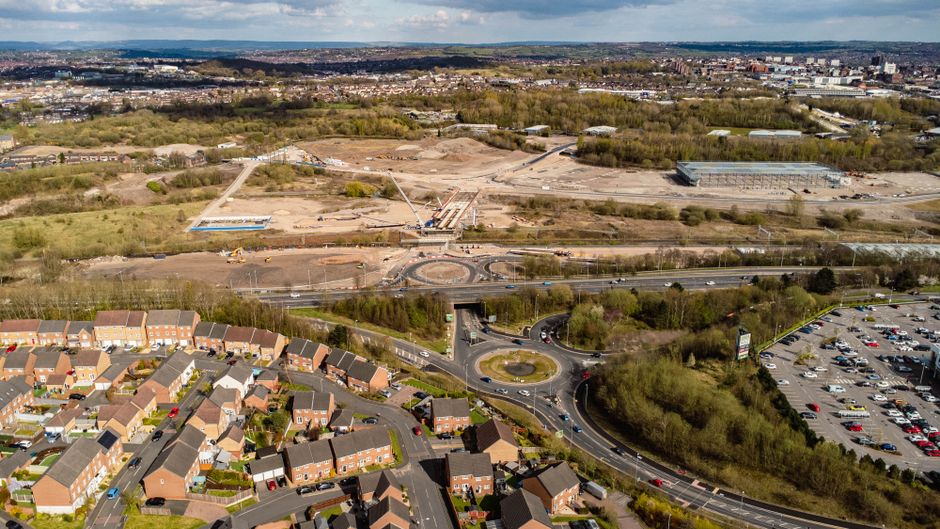
The grey belt is defined in the NPPF as land within the Green Belt that comprises previously developed land and/or land that does not strongly contribute to preventing urban sprawl, stopping towns from merging, or preserving the setting of historic towns. The government was explicit at launch: this meant disused petrol stations, abandoned car parks, scrubland. Low-quality. Unloved. Genuinely surplus to environmental purpose.
Eighteen months of implementation have produced a more complicated picture. Research by the London Green Belt Council and CPRE Hertfordshire found that 89% of planning applications submitted on Green Belt land in Hertfordshire were classified by developers as grey belt — far beyond the narrow category ministers originally described. More strikingly, over 80% of London Green Belt planning appeals between February and December 2024 were approved on grey belt grounds, more than double the historic approval rate for any Green Belt application.
By March 2025, over 100 appeal decisions nationally had cited the grey belt concept in their reasoning — a rapid and telling uptake for a policy barely three months old at that point. Early consents include a 550-home scheme in St Albans, 250 homes near Basildon and 135 homes in Bagshot, Surrey: all sites that would almost certainly have been refused under the prior rules. The Planning Portal reported 335,000 homes applied for outside London in 2025, a 60% increase on 2024 — with grey belt reforms credited as a meaningful driver.
The Planning and Infrastructure Act, passed in December 2025, has since cemented these reforms into statute, alongside £48 million to recruit approximately 1,400 new planning officers and a streamlined environmental assessment process designed to reduce scheme-level delays.
Where is the pipeline building? A regional picture
REalyse planning data tracking residential applications across the UK reveals a highly uneven pipeline — and points clearly to the regions with the most to gain from grey belt reclassification.
South East England leads the national pipeline, with nearly 960,000 residential units either granted or in progress — the highest of any region. That headline figure sits alongside the highest volume of refused units in the country (over 141,000), a sign of how constrained Green Belt land has historically throttled supply in exactly the areas of strongest demand. Grey belt reform matters most here: the Home Counties are the front line.
London carries the second-largest pipeline, with around 857,000 units granted or in progress. Yet on-the-ground delivery has lagged badly. In the first nine months of 2025, only 3,248 new homes for private sale or rent began construction in the capital — against a government target of 88,000 completions per year. Building Safety Regulator processes have been cited as a significant drag on high-rise schemes, and viability constraints are biting hard where land costs are highest.
The East of England — spanning Hertfordshire, Essex, Cambridgeshire, Bedfordshire and beyond — holds over 708,000 units in the pipeline, making it the third-largest regional opportunity. This corridor is already the most active battleground for grey belt classification, with the Home Counties and the Cambridge growth arc seeing the heaviest concentration of applications on former Green Belt land.
Further north and west, the pipeline thins but remains substantial. The North West (over 536,000 units), Scotland (around 456,000), West Midlands (approximately 410,000) and Yorkshire and the Humber (around 381,000) all carry meaningful pipelines, though the interplay with Grey Belt reforms is less direct — these regions have more brownfield capacity and less acute Green Belt pressure.
Wales, Northern Ireland and the North East show significantly smaller pipelines in absolute terms, reflecting both smaller land areas and lower baseline demand. Grey belt reform is primarily an English policy; Scotland, Wales and Northern Ireland each operate distinct planning frameworks and are not directly subject to the NPPF changes.
The land value equation — and the investor opportunity
For landowners and developers, the arithmetic of grey belt reclassification is transformative on paper. Agricultural land within the Green Belt has historically traded at roughly £8,000 to £15,000 per acre. Residential development land — with planning consent — can command £500,000 to over £2 million per acre depending on location, density and the mix of affordable housing required.
REalyse data on achieved sale prices per square foot provides a guide to where that value uplift is most pronounced. In South East commuter belt locations — the Surrey Hills fringe, outer Hertfordshire, the Essex/Kent corridors — new-build homes typically achieve £350 to £500 per square foot. At achievable densities on grey belt sites, the implied residual land value can represent a step change in asset worth overnight, even after accounting for 50% affordable housing requirements under the grey belt 'golden rules.'
Those golden rules are not trivial. Grey belt schemes must deliver at least 50% affordable housing, make meaningful infrastructure contributions and meet high design standards. On sites where viability is already marginal, these obligations will suppress land value uplifts significantly and in some cases will prevent schemes from coming forward at all. REalyse viability and comparables data can help investors and developers stress-test these assumptions before committing to site acquisition — a critical step in a policy environment where the rules are still being defined case by case.
Industry analysis suggests the grey belt could theoretically accommodate between 3.4 and 4 million homes if applied at scale. Research by Lomond estimates that utilising just 1% of England's Green Belt — which covers approximately 1.64 million hectares, around 13% of England's total land area — could deliver over 738,000 homes alone.
The delivery gap: why permissions are not the same as homes
Perhaps the most uncomfortable finding in the current debate is that over 1.4 million homes with planning permission granted since 2017 remain unbuilt. This is not primarily a planning system problem — it is a delivery problem, and it is structural.
The UK construction sector is estimated to be more than 150,000 workers short of requirements. Only around 24,500 people began construction apprenticeships in England last year. Materials inflation has cooled from its 2022–23 peaks, but labour, regulation and compliance costs remain elevated, with some developers forecasting build cost increases of over 15% across the next five years.
REalyse planning pipeline data confirms the scale of what has been consented but not yet built. Across every region, the ratio of in-progress units to granted units tells the same story: a system processing applications faster than the industry can convert them into completions. The government's response — £625 million for construction skills training, tougher accountability measures for developers who bank permissions without building, and a £39 billion commitment to social and affordable housing announced in the June 2025 Spending Review — addresses parts of the problem. But ministers have acknowledged that annual completions will need to roughly double by 2027 if the 1.5 million target is to be reached.
Outlook: ambition, friction, and where it goes from here
Grey belt reform has undeniably changed the calculus for land promotion in constrained markets. Sites that would have been non-starters two years ago are now in active promotion. The 60% surge in planning applications outside London in 2025 is real, and an 18% increase in new-build starts in the year to September 2025 points to early green shoots. But starts and completions remain far below what the target demands.
For the 1.5 million homes pledge to succeed, grey belt reclassification will need to work alongside brownfield intensification, new town delivery, public sector direct build, and a meaningful improvement in construction capacity. Treating it as the primary solution risks both undershooting the housing target and overshooting the Green Belt protections the government promised to maintain.
For developers, investors and lenders navigating this landscape, the message is clear: the opportunity is real, the policy direction is set, but scheme-level due diligence has never mattered more. Understanding where the pipeline is strongest, where demand underpins viability, and where political and legal risk may stall delivery will separate the winners from the stranded.
The planning rules are being rewritten. The question is whether England can build fast enough to make the most of them.