Planning pipeline swells, completions stall: what the permissions-to-purchase gap means for UK sales markets


The permissions story looks better than the delivery story
Anyone reading planning headlines in 2026 could be forgiven for expecting a wave of new stock to hit the sales market. Government figures show councils in England granted 87% of planning decisions in the year to December 2025, and Homes England has just posted its strongest delivery year in six years. Build-to-rent investment hit a record £5.3 billion in 2025, and the social and affordable housing pipeline is arguably the healthiest it has been since the mid-2010s.
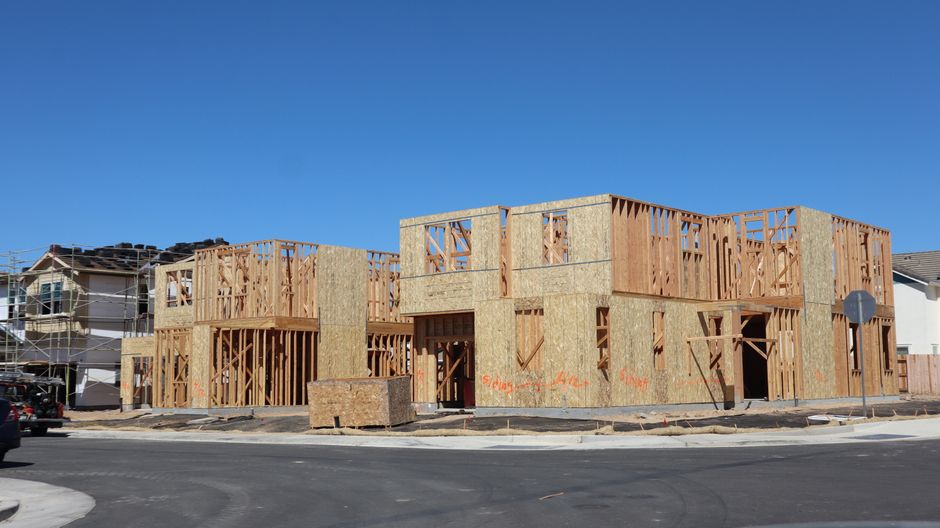
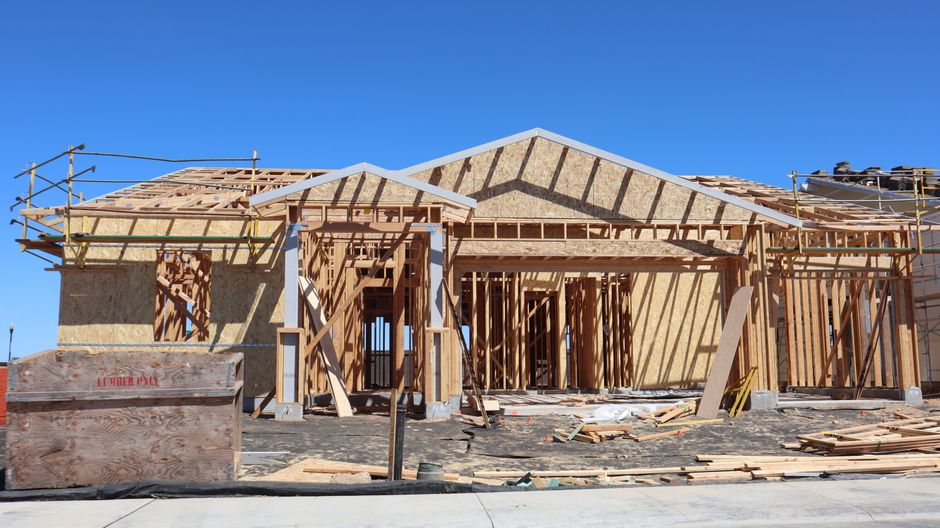
But completions tell a different story. England's total new-build completions fell to roughly 143,000 in 2025-26, the lowest since 2015-16, while UK-wide net additional dwellings dropped to around 199,500 — some way short of the 300,000-a-year run rate needed to hit the government's 1.5 million homes ambition. Residential planning permissions granted in England have fallen from around 28,500 schemes in 2018 to roughly 11,500 in 2024, a drop of more than half in unit terms over six years, before ticking up only marginally into 2026.
For sales-market participants, that combination — a swelling technical pipeline alongside a shrinking flow of finished, saleable homes — is the real story. It's not simply a planning problem. It's a question of whether consented land is converting into stock that buyers can transact on, at prices they can afford, in the volumes the market needs.
Where the gap is widest — and where it isn't
REalyse planning and delivery data shows this gap is highly localised rather than a single national trend. Build-out rates — completions measured against units granted consent over the same period — vary enormously by region:
• London: around 71% build-out, with roughly 41,000 units consented against only 29,000 completions in the same period — reinforcing the capital's status as a buyers' market with elevated stock levels but comparatively thin delivery.
• South East: closer to balance at around 111%, though Savills notes the region's consent-to-completion margin has narrowed to roughly 5%, putting future supply at risk.
• North West and East Midlands: build-out rates exceeding 150%, as developers work through legacy consents faster than new permissions are replenishing the pipeline.
• Wales: build-out above 200% in places, reflecting strong conversion of an older backlog rather than fresh momentum.
Six of nine English regions granted consent for fewer homes than they completed in the year to Q1 2026 — a signal that, absent a change in approval rates, the pipeline itself is contracting even as delivery data looks temporarily healthier. For investors and lenders underwriting land or development finance, this means planning risk and delivery risk need to be assessed locally, authority by authority, not read off national headlines.
Why permissions aren't turning into homes for sale
A grant of planning permission is closer to the middle of the journey than the end of it. Industry commentary this year has been blunt about the post-consent bottlenecks: Section 106 negotiations, discharge of pre-commencement conditions, utilities and drainage capacity, contractor pricing, and — increasingly — viability itself.
Construction cost pressure remains a genuine constraint. Around 78% of construction firms report material shortages, the highest share on record, and the sector faces a shortfall of more than 140,000 workers. For a scheme priced against today's build costs and yesterday's land value, viability can evaporate between consent and start-on-site, particularly for SME builders without the balance sheet to sit on land.
REalyse pipeline analysis has also flagged a meaningful volume of schemes stalled or shelved after securing at least partial planning progress — representing tens of thousands of units that have effectively fallen out of the near-term delivery pipeline. These are not planning failures; they're commercial ones, driven by financing terms, softer local demand, or shifting affordable housing obligations. For anyone modelling future supply in a given postcode district, "units granted" is a poor proxy for "units coming to market" without local delivery-rate context.
The demand side: is weak delivery actually hitting affordability and buyer behaviour?
The sales market itself is not short of stock at the point of transaction — quite the opposite in parts of the country. Zoopla data shows the number of homes for sale is running around 6% higher year-on-year, with the average agency branch marketing the most properties in eight years, and buyer demand roughly 9-10% below last year's stamp-duty-distorted comparison. Average five-year fixed mortgage rates easing toward 4% in late 2025/early 2026 briefly supported affordability, though rates have since been volatile, pushing back above 5% amid wider global uncertainty.
That combination — elevated for-sale stock but softer demand — looks, on the surface, like an oversupplied market. But it largely reflects existing homes churning through the resale market rather than new-build completions easing structural undersupply. UK-wide house price growth of around 1-1.5% annually, tracking below long-run averages, is consistent with a market where affordability constraints are doing more work than a genuine surplus of new homes.
Regional divergence is the more useful signal for sales strategy. Price growth in the Midlands, northern England, Scotland and Northern Ireland has run at 2-4x the pace seen in London and the South East, where affordability is more stretched and supply — including planned new-build stock — is comparatively higher relative to demand. REalyse comparables data across local authority areas shows consented, "oven-ready" land increasingly commanding a premium over unconsented sites, reflecting how scarce genuinely deliverable pipeline has become even where headline permission volumes look adequate.
For developers and agents, this points to a bifurcated sales environment: realistic pricing and strong presentation are non-negotiable in southern markets facing buyer choice, while northern and devolved nation markets with tighter effective supply retain more pricing power, assuming completions can actually reach the market on schedule.
Outlook
The structural story hasn't changed: England's permissions have fallen sharply since 2018, completions are running near decade lows, and the lag between consent and delivery — typically 18 to 36 months for standard schemes, longer for strategic sites — means today's weak permission volumes will constrain 2027-28 supply regardless of any near-term recovery in starts.
For institutional buyers, lenders and developers, the practical takeaway is to treat "planning pipeline" and "sales-ready supply" as two different metrics requiring separate due diligence. Local build-out rates, stalled-scheme volumes, and consented-land premiums are as important to underwriting as headline consent numbers. Areas where planning, viability and demand are genuinely aligned — rather than just areas with high approval counts — are where completions, and sales absorption, are most likely to hold up through 2026 and beyond.