Cambridge East and the Greater Cambridge Development Corporation: a blueprint for state-backed urban expansion


A city that has outgrown its supply
Greater Cambridge is one of the most economically productive places in the UK. Home to a globally ranked university, a dense cluster of life sciences and technology firms, and a growing financial and professional services base, it consistently records some of the highest residential property values outside prime central London. Yet for nearly two decades, the city's housing supply has failed to keep pace with demand — a failure rooted not in a lack of planning ambition but in fractured delivery mechanisms, infrastructure constraints, and a site that repeatedly stalled.
That changed on 3 June 2026, when Homes England — acting through its National Housing Bank — and The Hill Group completed the acquisition of Cambridge East: a 700-acre brownfield site on the eastern edge of the city, formerly the home of Cambridge City Airport operated by the Marshall Group. The same week, the government confirmed the creation of the Greater Cambridge Development Corporation, a new statutory body that will assume planning powers for major schemes from autumn 2026 and be fully operational by early 2027.
These are not two separate stories. They are one: a deliberate, coordinated act of state-backed intervention designed to prove that strategic national development can succeed where incremental local planning has struggled.
What the data tells us about Cambridge's market pressure
To understand why intervention at this scale is necessary, it helps to look at what residential property data reveals about Greater Cambridge's pricing environment.
REalyse transaction data for 2024 and 2025 shows average sold prices across the CB postcode districts ranging from approximately £402,000 in outer rural districts (CB25) to over £830,000 in CB3 — the area immediately west of the city centre near the university. On a per-square-foot basis, core Cambridge districts (CB1, CB3, CB5) are trading between £515 and £577 per square foot, levels that place the city firmly in a tier shared only by the most sought-after London boroughs and prime university towns.
CB5 — the district geographically closest to the Cambridge East site — recorded an average sold price of around £501,000 in 2024, at approximately £516 per square foot. If the Cambridge East scheme reprices the area through improved connectivity, placemaking and amenity, that baseline could shift materially upward across the eastern fringe of the city.
Rental yields tell a similarly pressured story. Across the Greater Cambridge area, REalyse data shows average gross yields of around 5.2% for flats and 5.6% for terraced houses — notable figures for a premium academic city where capital values are high. Average asking rents for flats are running at approximately £1,650 per month, with houses reaching £2,500 per month. These yields are sustained by structural undersupply relative to a highly mobile, high-earning population of researchers, tech professionals and graduate students — exactly the demographic Cambridge East is designed to house.
The planning pipeline: ambition visible, delivery uncertain
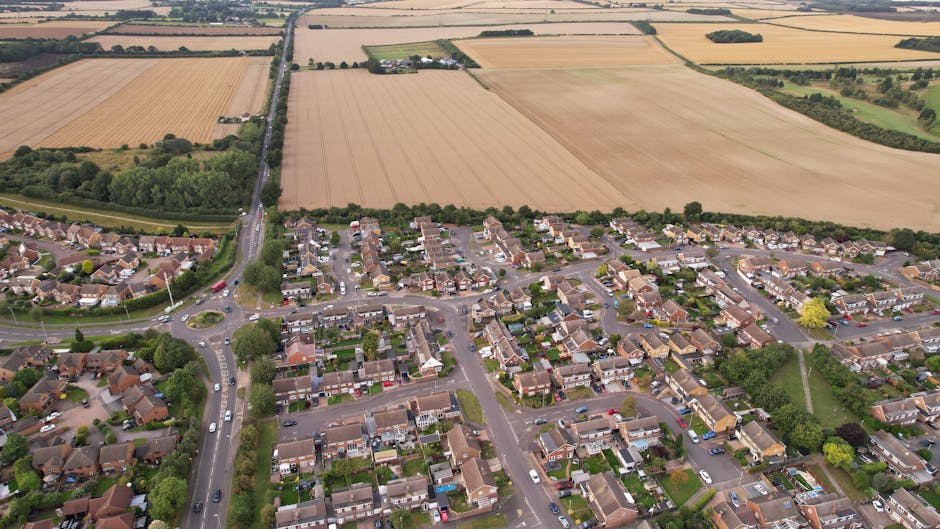
Cambridge's planning pipeline has not been idle. REalyse planning data covering the ten CB postcode districts shows that — across all districts — more than 34,600 residential units have been granted planning permission in the Greater Cambridge area, with a further 11,000-plus units currently in progress through active applications.
CB24, the northern fringe district, accounts for the largest single bloc of granted permissions at over 10,100 units alone. CB1 — central and east Cambridge — has seen 7,400 units granted. CB3 has an extraordinary 8,600 units in active applications, suggesting that major strategic schemes to the west of the city are already moving through the system.
Despite this, the Greater Cambridge Shared Planning service confirmed that, even after granting permission for more than 10,000 homes in the single year to March 2025, a pipeline of roughly 37,000 permitted-but-unbuilt homes sits largely dormant. The gap between permission and delivery is precisely the structural failure the Development Corporation is designed to close.
The Greater Cambridge Development Corporation will adopt what the government describes as an "infrastructure-first" approach — meaning roads, rail, utilities and social infrastructure will be committed and, where necessary, funded before developers are expected to build. This inverts the traditional British model, in which housebuilders wait for market conditions to validate delivery and infrastructure follows (or fails to follow) housing construction.
Cambridge East as a test case for the Oxford-Cambridge Growth Corridor
Cambridge East is not simply a housing project. The 700-acre site will deliver:
• 10,000+ new homes, with an affordability commitment expected to form part of the planning framework
• At least 3 million sq ft of commercial and employment space, targeting approximately 9,000 jobs
• Schools, healthcare facilities and public green space, all designed in from the outset
• A proposed Cambridge East railway station — subject to funding — that would link the development to central Cambridge and extend eastward toward Bedford and Oxford as part of the Growth Corridor ambition
• A potential regional construction training hub, designed to address the skills gap in the delivery workforce itself
The Marshall Group, which has owned the airport site and nurtured plans since 2019, will relocate its remaining aviation operations by mid-2029, clearing the way for the first phase of construction. Hill Group and the Cambridge Growth Company — a subsidiary of Homes England — will act as co-master developers, drawing on their respective track records in delivering large-scale, complex urban schemes.
For investors and development analysts, Cambridge East represents something relatively rare in the current market: a credibly backstopped, infrastructure-committed, brownfield urban extension in one of the UK's most supply-constrained and economically resilient housing markets. The combination of state land acquisition, public infrastructure commitment and an experienced commercial delivery partner is designed to de-risk the kind of long lead-time, first-phase investment that has historically deterred private capital from schemes of this scale.
Political architecture: the Development Corporation model
The Greater Cambridge Development Corporation sits within a broader policy shift. Alongside the Cambridge announcement, Chancellor Rachel Reeves described Greater Cambridge as a "powerhouse for regional growth" central to the Oxford-Cambridge Growth Corridor — itself one of the most strategically significant spatial economic frameworks in UK government policy.
Housing Secretary Steve Reed framed the Corporation as a vehicle to deliver "more affordable homes, good jobs for local people and infrastructure that supports its communities." The Cambridgeshire Chamber of Commerce welcomed the announcement as an "important step towards delivering the homes, infrastructure and economic growth needed to support the region's long-term prosperity."
Not everyone shares the enthusiasm. Cambridge City Council and South Cambridgeshire District Council have raised objections to elements of the proposal — specifically the Corporation's power to override local democratic input on planning decisions once it assumes control of the Local Plan function. The council's own record — granting permission for more than 10,000 homes in a single year — suggests that planning consent has not been the fundamental bottleneck. Critics argue the real barriers are infrastructure funding, viability, and build-out rates by private developers, none of which a Development Corporation automatically resolves.
Those are legitimate concerns. But they speak to a delivery challenge, not to the irrelevance of the intervention. The point of the Development Corporation model — as evidenced by the Mayoral Development Corporations in Stratford and Old Oak Common — is not to replace democratic accountability but to concentrate resource, decision-making speed and infrastructure commitment in a single delivery vehicle capable of holding developers to programme.
Outlook: a model or a one-off?
The Cambridge East acquisition and the Greater Cambridge Development Corporation together constitute the most significant test of state-led housing and infrastructure delivery in England since the post-war New Towns. If the model works — if the station gets funded, if affordable housing targets are met, if 10,000 homes are built within a credible timeframe — it will become a template for similarly stalled large-scale urban extensions elsewhere in the Growth Corridor and beyond.
REalyse data already shows that Greater Cambridge's planning pipeline is deep: the approvals are there, the demand is there, and the yields are there. What has been missing is the delivery infrastructure and the institutional will to back it with public capital. Both are now, at least nominally, in place.
The question is whether the Greater Cambridge Development Corporation can translate a compelling policy architecture into bricks, mortar and occupied homes — and whether Cambridge East can prove, for the first time at scale, that infrastructure-first development really does unlock supply that the market alone cannot deliver.
For investors, developers and lenders watching the Oxford-Cambridge corridor, that question is worth following very closely.