

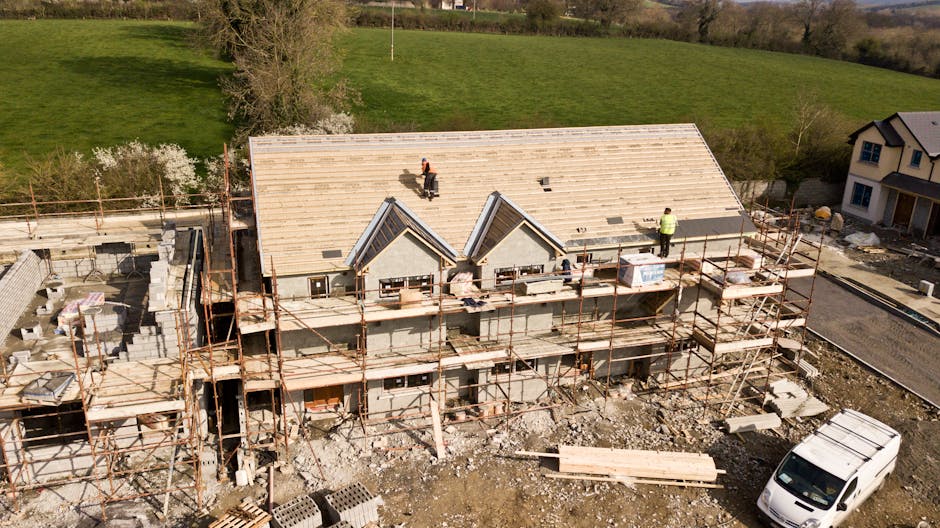
Developers under pressure as build costs rise and housing completions fall


The UK's housing delivery machine is grinding to a slower pace. Despite political commitments to build 1.5 million homes and persistent demand for new housing, completions in England dropped to 142,040 in the year to December 2025—the lowest level since 2016. The culprit is not a lack of ambition, but a confluence of cost pressures, financing constraints, and regulatory burdens that is reshaping the economics of housebuilding and forcing smaller developers to the sidelines.
A shrinking pipeline and falling completions
REalyse planning data reveals a concerning trend in the residential development pipeline. Approved residential units in England and Wales have declined year-on-year, falling from over 344,000 units in 2023 to approximately 203,000 in 2025. Planning approval rates, which held steady at around 71% through 2023–2025, have started to slip in early 2026 as local authority planning departments struggle with capacity constraints.
Official figures from the Department for Levelling Up confirm the picture on the ground: completions in England dropped 12.6% in the first half of 2025 compared with the same period a year earlier. New housing starts fell 28% in 2024–25, creating a significant pipeline gap that will constrain completions for years to come. In London, the situation is particularly acute, with new home starts down 30% in the year to September 2025.
The top 10 housebuilders have managed to sustain modest growth in annual completions, recording a 2.8% increase through mid-2025. But smaller housebuilders—the SME developers who historically delivered a third of the UK's new homes—saw completions fall by 7.2% over the same period. The market is consolidating, and not by choice.
The cost squeeze on SME housebuilders
The Home Builders Federation (HBF) has calculated that new taxes and policy costs have added approximately £76,000 to the cost of building a new home—equivalent to more than 20% of the average new home value of £365,000. For SME developers without the scale to absorb such increases, this represents an existential challenge.
Three-quarters of construction SMEs surveyed in late 2025 reported concerns about rising material costs, while 57% flagged increasing wages. The pressure is not just from inputs: off-plan sales—where buyers purchase homes before completion—have fallen to a 12-year low of just 33% in 2025, down from 49% in 2016. This matters because off-plan sales allow developers to pay down development finance earlier, reducing their exposure to interest costs.
Hamptons estimates that the decline in off-plan activity, combined with elevated interest rates, has added £264.5 million in additional financing costs for housebuilders compared with a decade ago. For SME developers lacking deep balance sheets, the squeeze on cash flow can tip marginal sites from viable to uneconomic.
Construction insolvencies reached 297 cases in November 2025, and more than 102,000 construction companies were classified as being in "significant distress" during the second quarter of 2025—a 14% increase year-on-year. The FMB and CIOB State of Trade Survey found that 42% of firms changed contractors during the second half of 2025, with nearly a quarter of those changes driven by insolvencies.
Regulatory complexity adds another layer
Beyond input costs, developers face a growing burden of regulatory compliance. The Building Safety Levy, due to come into force in October 2026, will apply to all new homes of more than 10 dwellings and aims to raise £3.4 billion—despite the industry having already committed £7 billion to building safety measures. Landfill Tax doubled in April 2026, adding further cost pressure. The Future Homes Standard, while delivering genuine improvements in energy performance and sustainability, requires developers to invest in new construction methods and materials.
REalyse data shows that average scheme floor areas have declined, suggesting developers are building smaller to manage costs. The shift towards lower-density suburban housing schemes—which sell more rapidly and limit balance sheet exposure—reflects a strategic response to financing pressures rather than genuine market preference.
The HBF is calling for a moratorium on further taxes, levies, and policy costs affecting residential development, alongside a comprehensive review of cumulative regulatory impacts. Without such relief, the Federation warns that the government's housing ambitions will remain out of reach.
Investment demand remains strong despite delivery challenges
The paradox of the current market is that underlying demand for UK residential assets remains robust. REalyse data shows new-build transaction prices have held firm, averaging around £403,000–£405,000 through 2024–25. Regional cities such as Manchester, Leeds, and Birmingham continue to offer gross yields of 6–7%, compared with around 4% in prime London locations.
The build-to-rent sector has grown to 146,700 homes across the country, with a pipeline of 227,400 homes in planning or construction. Institutional investors remain active, drawn by the structural undersupply of rental housing and the ongoing exit of private landlords from the market. Void periods in London rental properties have compressed to just 11 days, down from 21 days in late 2022.
Medium-term forecasts point to house price growth of around 22% over the next five years, according to industry analysts. The supply-demand imbalance, while problematic for affordability, underpins the investment case for those able to navigate current cost pressures.
What this means for the market
For developers, the message is clear: rigorous site appraisal, accurate cost forecasting, and realistic financing assumptions are more important than ever. REalyse planning and transaction data can help identify locations where demand remains strong relative to pipeline, and where comparable evidence supports achievable sales values.
For investors and lenders, understanding the viability pressures facing development partners—particularly SME housebuilders—is essential for risk management. The consolidation of the market into the hands of larger players may reduce competition but also concentrates exposure.
For policymakers, the gap between housing targets and delivery continues to widen. Planning reforms and investment in local authority capacity are welcome, but without addressing the cumulative cost burden on developers, completions are unlikely to recover to the levels needed to meet demand.
The UK residential market remains fundamentally undersupplied. The challenge for 2026 and beyond is ensuring that the economics of building new homes work for a broad range of developers—not just those with the deepest pockets.


