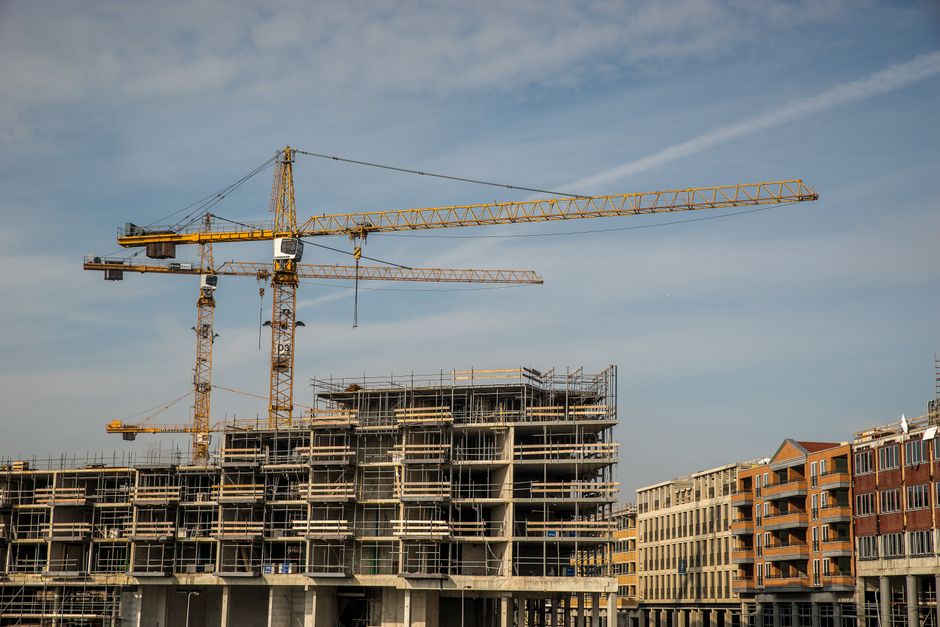
BTR pipeline under pressure as regional starts plunge outside London


Regional BTR starts are falling faster than anyone in the sector predicted
Build-to-rent has spent the past decade positioning itself as the UK's most reliable source of new rental supply — professionally managed, institutionally backed, and largely insulated from the retreat of individual buy-to-let landlords. That story is now being tested. Industry data compiled by Savills for the British Property Federation and Real Estate:UK shows regional BTR starts falling by more than a third year-on-year, with some quarterly readings showing declines running even deeper into the regions than in London itself, where the Building Safety Regulator backlog has dominated headlines.
The optics are counterintuitive. London's BTR troubles have been well documented, driven largely by Gateway 2 delays and viability pressure on high-rise schemes. But the sharper structural concern for institutional investors is regional: outside the capital, where land is cheaper, planning is typically faster, and rental demand is arguably stronger relative to supply, starts have fallen even further. That is not a regulatory story. It is a viability story.
Planning pipeline keeps growing, delivery does not follow
REalyse's planning and development data shows a familiar pattern across regional BTR schemes: strong flow at the "detailed plans submitted" and "granted" stages, but a growing backlog of consented units that never progress to a start-on-site. Nationally, detailed BTR planning consents have continued to rise even as starts have fallen — official figures put consented BTR stock at over 67,000 homes, up double digits year-on-year, while completions have now outpaced starts for close to two years running.
This divergence matters for anyone underwriting regional deals. A rising consented pipeline looks superficially healthy on a planning dashboard, but it increasingly reflects sites that developers and forward-funders are unwilling or unable to bring forward at current build costs and yield expectations. For lenders and investment committees, the practical implication is that headline "pipeline" figures for a given city or postcode district need to be read alongside conversion rates from consent to start — not treated as a proxy for future supply on their own.
Why regional viability has deteriorated
Several factors are compounding at once in regional markets:
• Build cost inflation has not fully reversed even as headline construction inflation has cooled, keeping build costs elevated relative to achievable rents in many secondary and tertiary regional cities.
• Policy uncertainty around potential rent controls and property taxation changes — including speculation ahead of recent fiscal events — has made forward-funders and institutional capital more cautious on regional commitments specifically, where rental growth assumptions are more sensitive to policy shifts.
• Financing costs remain a drag on schemes underwritten during the low-rate era, with refinancing and new debt now priced against a materially different base rate environment than when many regional pipelines were first assembled.
• PRS exits by smaller landlords, driven by tax and regulatory change, are adding pressure to demonstrate that BTR can plug the gap — even as the sector's own delivery engine slows.
REalyse comparables data across regional BTR-heavy markets — Manchester, Birmingham, Leeds and Glasgow among them — continues to show rental growth outpacing many southern English markets on a like-for-like £/sqft basis, underlining that this is a supply-side and financing problem rather than a demand problem. Tenant demand in these markets has not gone away; the economics of building for it have got harder.
What it means for rental supply and investor positioning
For institutional investors and lenders, the widening gap between consented pipeline and actual starts outside London carries a dual message. First, existing regional BTR assets — particularly stabilised, income-producing schemes in supply-constrained cities such as Manchester and Salford — look better positioned on a relative basis, since a slower pipeline behind them reduces future competition for tenants and supports rental growth assumptions used in underwriting.
Second, the opportunity for new capital may increasingly sit in forward funding and acquisition of stalled consented sites rather than ground-up speculative development. Sites that have secured detailed consent but stalled on viability represent a lower-risk entry point for investors able to move quickly on land value and construction cost renegotiation, particularly where local rental comparables justify a revised scheme economics case. This is exactly the kind of screening — consented pipeline cross-referenced against local sold and letting comparables, yields and days-on-market — where granular, postcode-level data can separate genuinely viable regional opportunities from schemes that will remain stuck in planning limbo.
For lenders, the message is to stress-test regional BTR facilities against extended programme assumptions and to weight local absorption and rental growth evidence more heavily than headline planning pipeline numbers, which are increasingly disconnected from delivery.
Outlook
The sector's own commentary is consistent: reforms to the Building Safety Regulator process and greater policy clarity on tax and rent regulation are the two levers most likely to unstick regional delivery. Absent that, the risk is a widening structural undersupply in exactly the regional rental markets — Manchester, Birmingham, Leeds, Glasgow, and the towns around them — that have underpinned the BTR growth story to date. For investors and lenders willing to look past this year's starts numbers, the regional consented pipeline, read carefully against local market fundamentals, may prove to be the more useful signal of where the next wave of viable BTR delivery will actually happen.