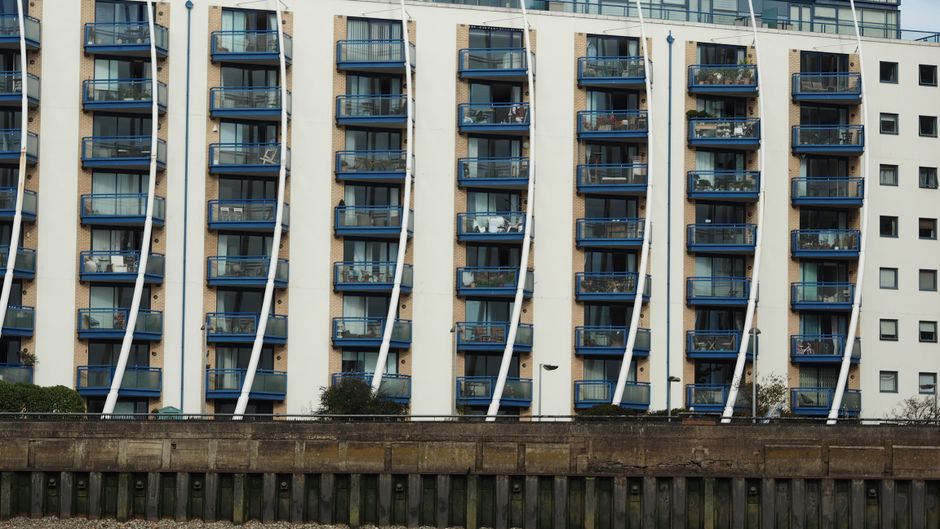
BTR flagship schemes win consent as councils back larger rental blocks


Consent momentum builds for large-scale BTR
Build-to-rent has spent the best part of a decade moving from a niche institutional product to a mainstream delivery model, but 2025 and early 2026 look like a turning point for scheme scale. Local planning authorities from Strathclyde to Croydon have been granting consent to flagship rental blocks numbering in the hundreds of units, rather than the smaller 50-100 unit schemes that characterised earlier BTR cycles.
REalyse planning data shows the median consented BTR scheme now sits at roughly 170-215 units, but the real story is the tail: a growing cluster of flagship approvals of 500 units or more. West Midlands local authorities granted five BTR schemes in 2025 totalling close to 2,900 units — an average of nearly 585 units per scheme, well above the national median. Early 2026 approvals continue that pattern, with single consents of 500+ units recorded in Strathclyde, Greater Manchester and Croydon.
This matters for investors and developers because scale is directly linked to viability. Larger consented schemes typically unlock better economics on shared amenity space, management overheads and construction procurement — precisely the factors that determine whether an institutional forward-funding deal stacks up.
Where planning support is translating into delivery
Consent volume alone doesn't tell the full story — the more useful question for underwriting is where granted pipeline is concentrated geographically. REalyse planning data points to a broadening of BTR consent beyond the traditional London and Manchester core.
Recent grants span a wide mix of markets:
• Regional cities: Liverpool, Sheffield and Hull have each seen BTR schemes of 100+ units granted, suggesting northern regional cities are becoming a genuine second wave of institutional rental delivery, not just an afterthought to London and Manchester.
• Outer London boroughs: Croydon, Bromley, Southwark and Ealing all feature in the recent grant data, reflecting outer London's role as a pressure valve for BTR demand that can no longer be accommodated as easily in central boroughs on land value grounds.
• Devolved nations: South Glamorgan (Cardiff) and Strathclyde (Glasgow) both show large single consents, indicating BTR's expansion into Wales and Scotland is not merely token activity but includes genuinely flagship-sized schemes.
For investors screening opportunities, this spread means the BTR site-sourcing conversation has moved beyond "which London zone" to a genuinely national comparables exercise — one where local planning policy, not just headline demand, is now a meaningful differentiator between markets.
What the pipeline mix tells lenders and investors
Not every application that enters the system reaches consent, and REalyse's planning pipeline data shows a substantial volume of BTR schemes still sitting in progress or awaiting decision alongside those already granted. For credit and risk teams underwriting forward-funded BTR debt, that split matters: a scheme still working through committee carries materially different risk to one with resolution to grant already secured.
The practical implication for lenders and investment committees is that planning stage should be treated as a first-order underwriting variable for BTR, not a formality to be waved through once heads of terms are agreed. Tracking decision status, planning stage and time-to-decision at local authority level gives a much sharper read on delivery risk than scheme-level due diligence alone.
Does consent momentum show up in rental performance?
The commercial case for backing larger BTR consents ultimately rests on whether the resulting stock performs in the rental market. REalyse rental listings data, comparing BTR-flagged flats against general flat stock over the past 12 months, shows a consistent pattern: BTR product commands a rent premium in almost every region tracked, without a corresponding sacrifice in yield.
In London, BTR flats achieve average asking rents of around £1,410 a month against roughly £940 for general flat stock in the same region — a premium of close to 50% — while gross yields are broadly comparable at 6.3% versus 6.2%. The West Midlands and Yorkshire and the Humber show a similar pattern, with BTR rents 25-30% ahead of general stock and yields modestly higher than the non-BTR comparison, at 7.8% versus 6.8% and 8.2% versus 7.6% respectively.
This is a meaningful data point for investment committees: it suggests professionally managed, amenity-rich BTR product is not simply diluting returns to buy scale, but is capturing a genuine rent premium from tenants willing to pay for quality and management standards — even in regional markets outside prime London.
Outlook
The combination of larger average consented scheme sizes, a widening geography of planning support, and rental performance data that shows BTR holding its own on yield gives institutional investors a more evidence-based case for continuing to back the sector at scale. The next test will be whether the current wave of large regional and outer-London consents converts into completed, income-producing stock at a pace that matches the ambition of the plans now on the table.
For teams underwriting the next wave of BTR opportunities, comparing local planning stage, consented scheme scale and rental comparables side by side — rather than relying on headline consent numbers alone — will be the more reliable way to separate genuine delivery momentum from pipeline that stalls at committee.